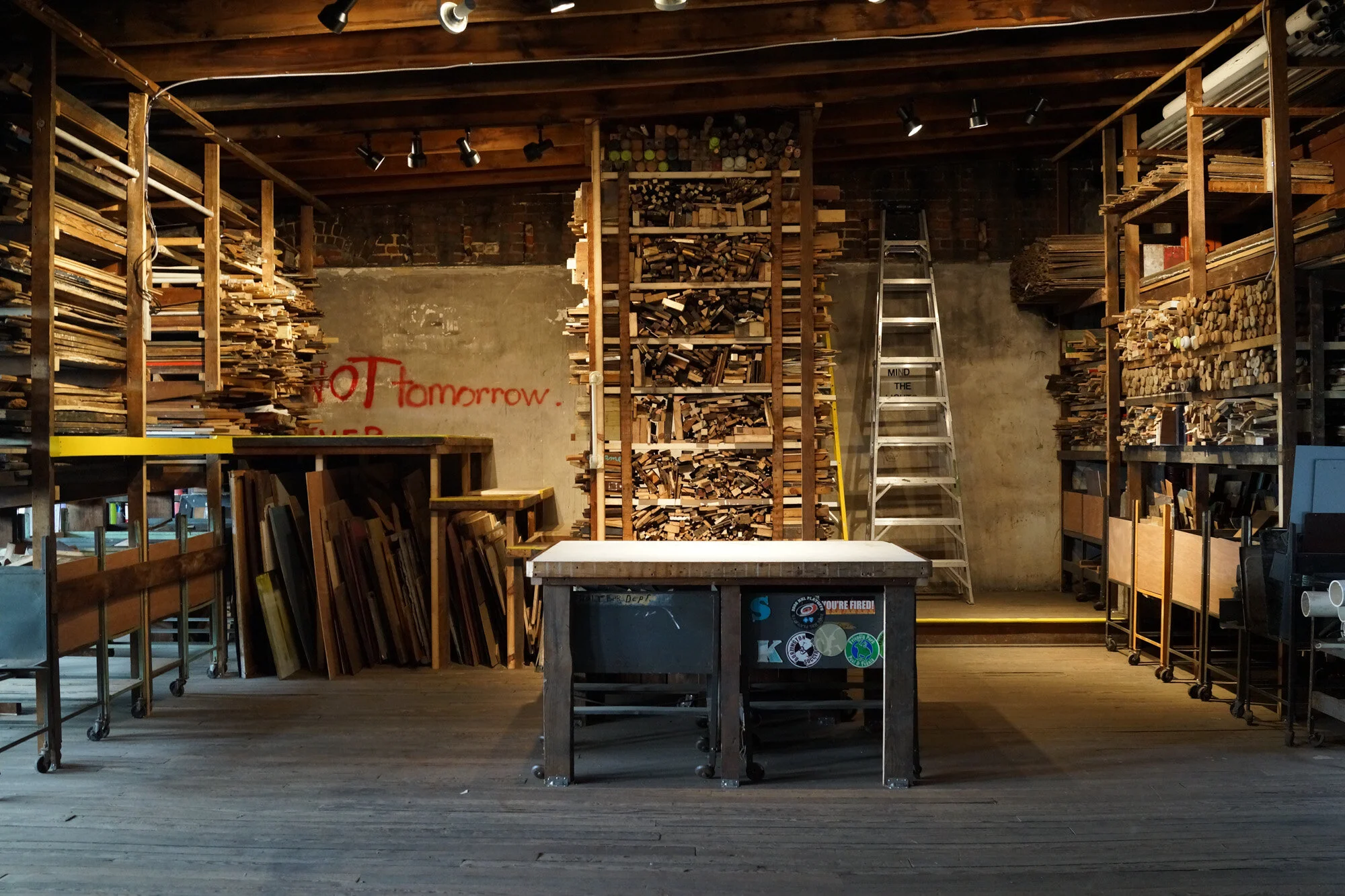
Elsewhere’s collection includes approximately 10,000 articles of army surplus from World War II and the Korean War; 10,000 bolts of vintage fabric; 20,000 items of vintage clothing dating from 1950 to 1997; 20,000 books from the 1950’s onwards; 2,000 assorted dishwares and 2,000 more kitchen objects; tools, machinery, and sewing items; and thousands of knick-knacks and ephemera. Everything that was in and a part of the building at the time the thrift store closed in 1997 is collection, so we carefully save every scrap of paper and wallpaper, lathe and plaster. The artistic projects made from these materials also become part of our collection.
VIRTUAL COLLECTION: PHOTOGRAPHIC ARCHIVE | VIMEO | FLICKR
Elsewhere’s building is three floors of spaces and places in which to live, create, and play. Over 500 artists have lived in the museum, creating projects and environments to explore.
Explore our spaces and the past and present projects within:
GROUND FLOOR: FRONT FACADE | FRONT WINDOW THEATER | KITCHEN COMMONS | THE LIBRARY | THE FABRIC WORKSHOP | THE GARDEN | THE AVIARY | BACK FACADE | RESTROOMS | COLAB | BASEMENT
SECOND FLOOR: BOARDING HOUSE ROOMS | GLASS FOREST | RIBBON ROOM | THE WARDROBE | ALONE ZONE
THIRD FLOOR: GHOST ROOM | WAREHOUSE | LITTLE ROOMS | RECORDS ROOM | ARMY SURPLUS ROOM | WOOD LIBRARY + WORKSHOP
FURTHER UP: SECRET FOURTH FLOOR | ROOF
GROUND FLOOR
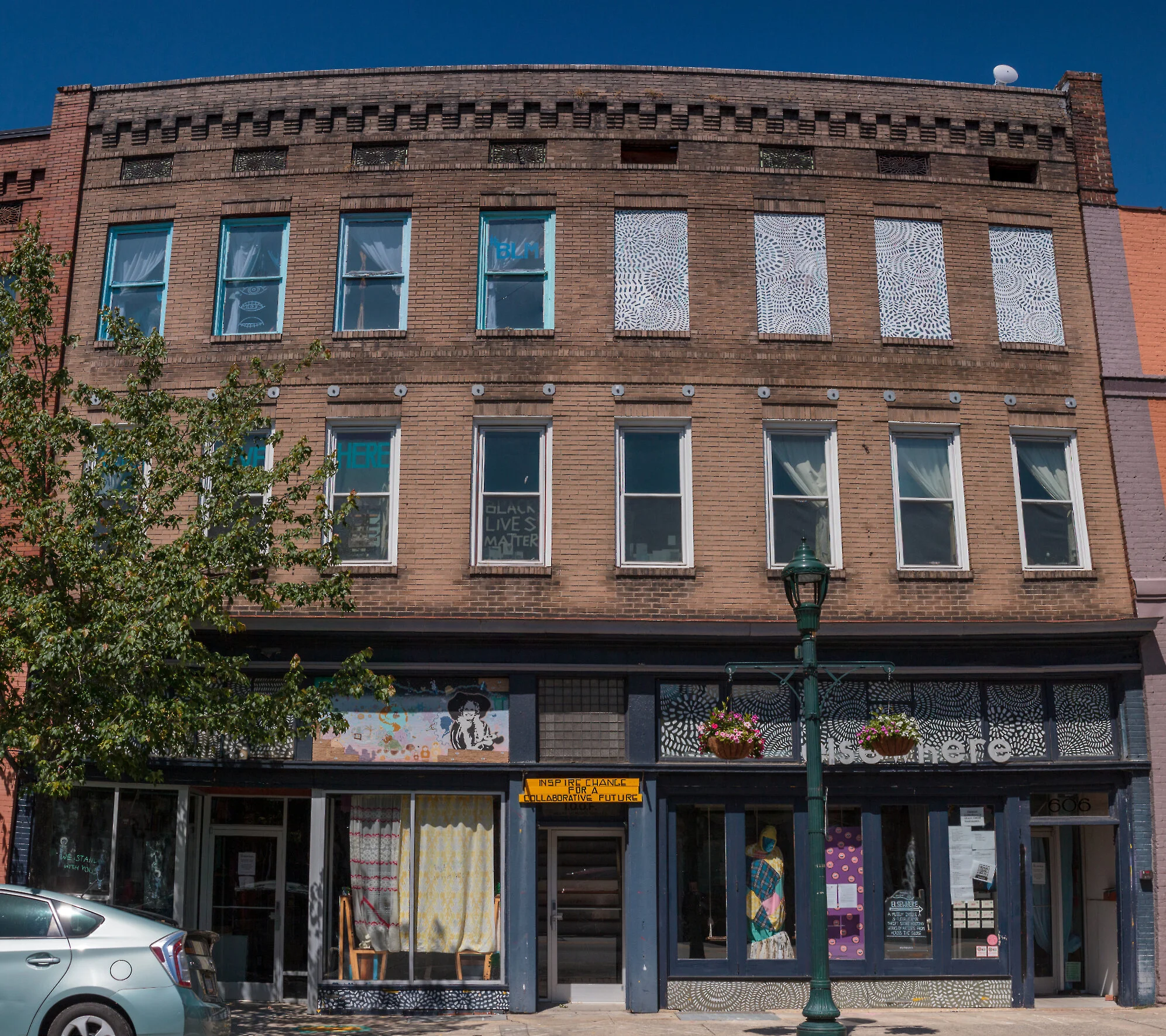
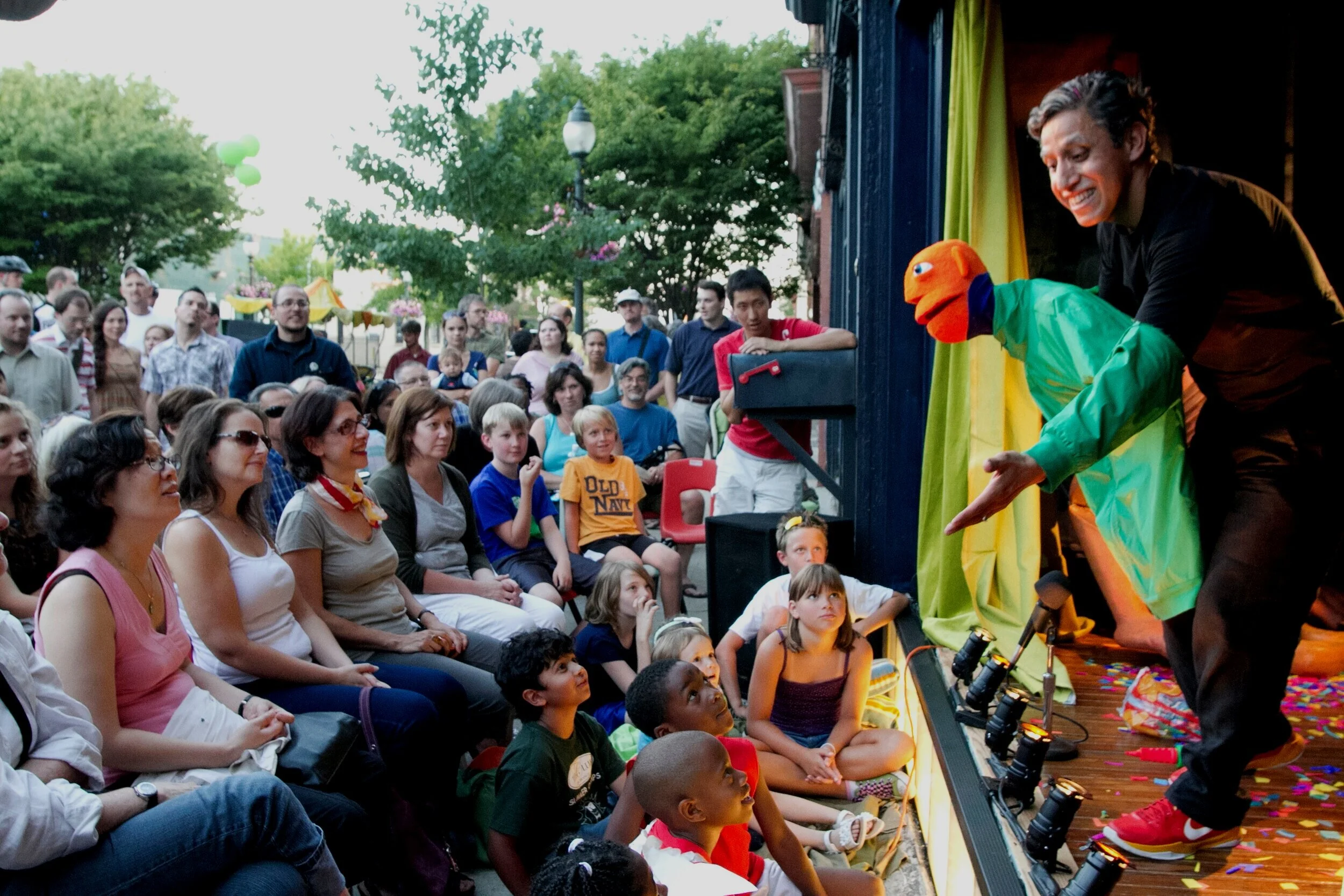
Front Window Theater
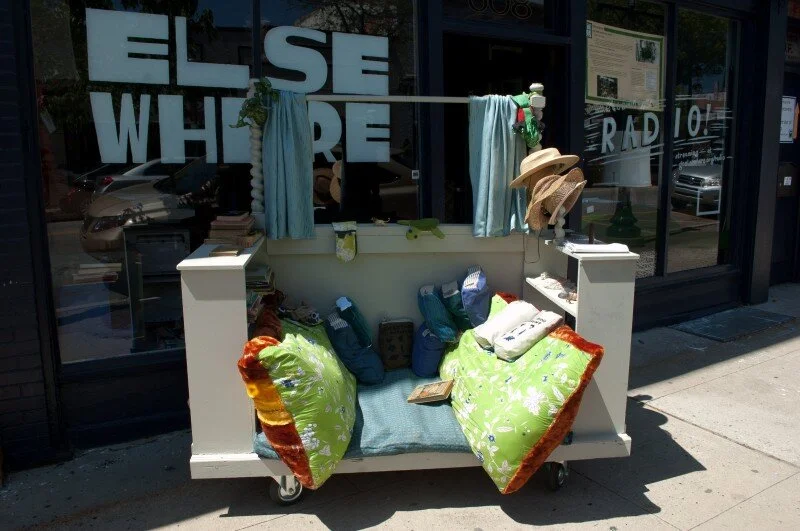
The front window has always been perhaps the most crucial intersection between the museum and Elm street. The opening front window was installed for three important reasons—to create a stage for street performance, to offer a community front porch, and to allow air to flow through the building before the days of air conditioning. Yes, there are swings that go in and out of the building.
Want to perform in the theater? Contact museum@goelsewhere.org
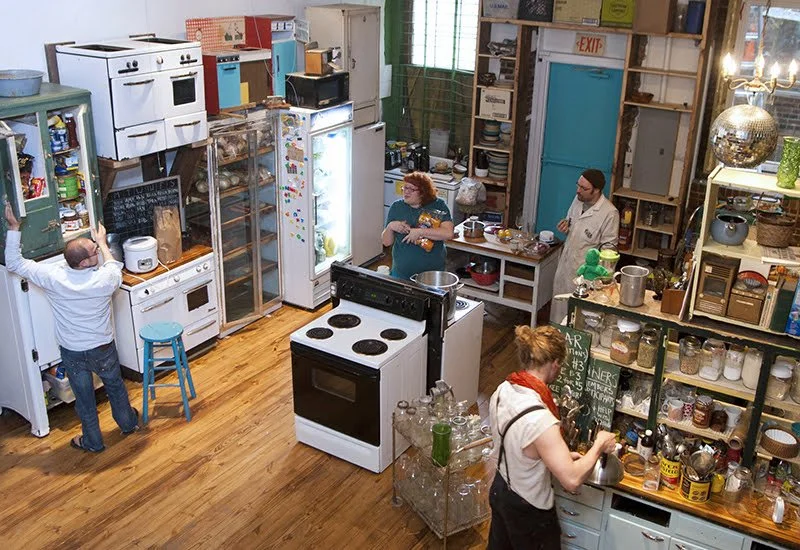
Kitchen Commons
Elsewhere’s kitchen commons is a place for shared meals and dining experiments. For $50/week, co-op members dine together on vegetarian delectables, and help themselves to breakfast and lunches. Each member cooks once a week for the group dinner, and everyone cleans together after every meal. The kitchen commons also hosts lots of special events, from fancy dinners led by artists, special rentals, iron chef competitions, and more. Designed by artist J Morgan Puett with collaborator Ian Montgomery.
Interested in cooking or hosting Elsewhere? We welcome rentals, chefs-in-residence, and workshops. Contact museum@goelsewhere.org
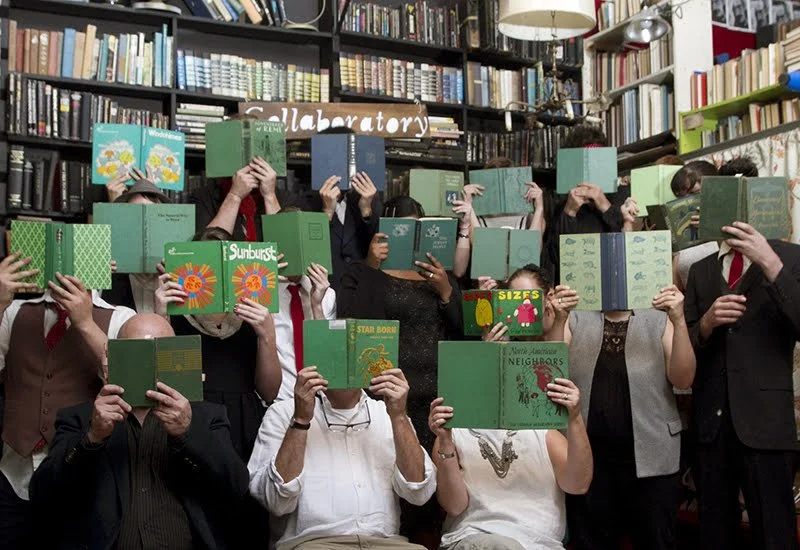
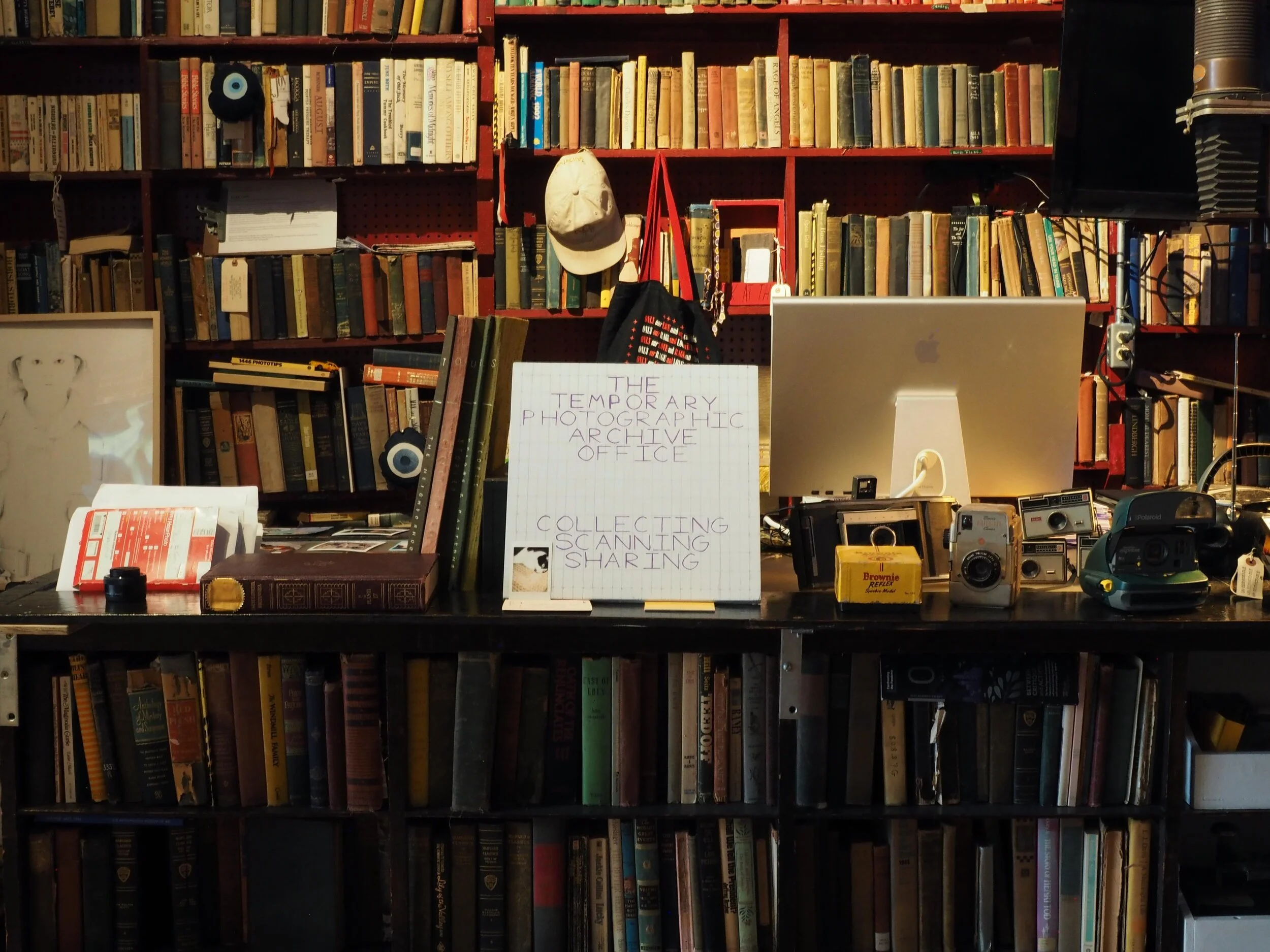
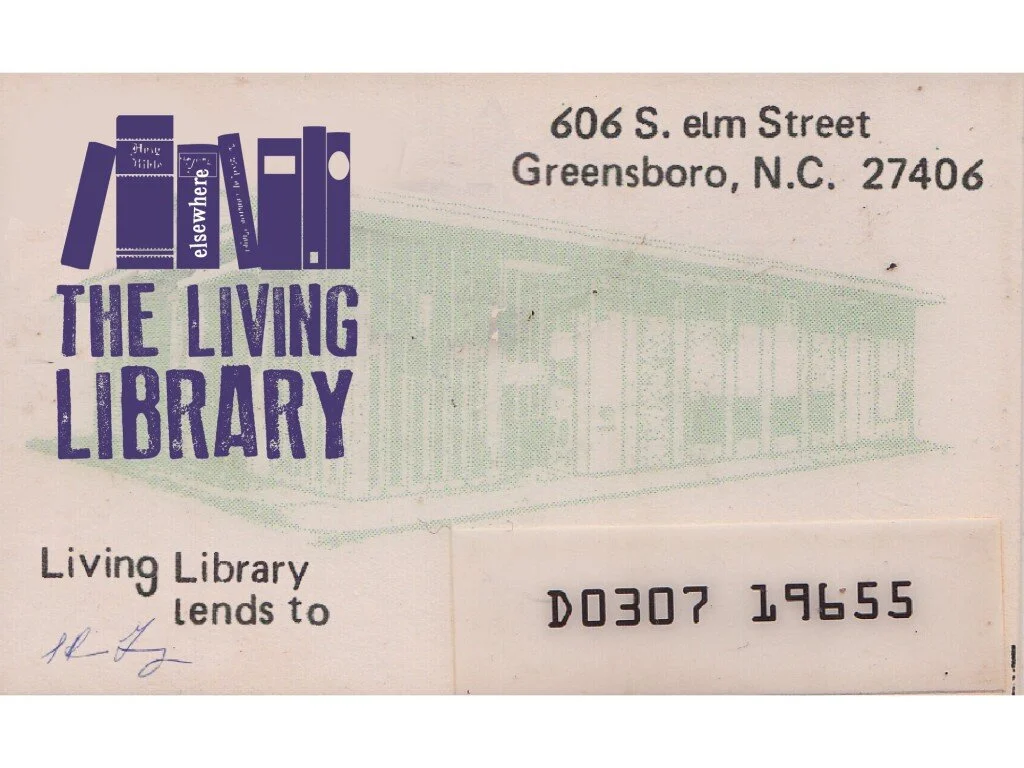
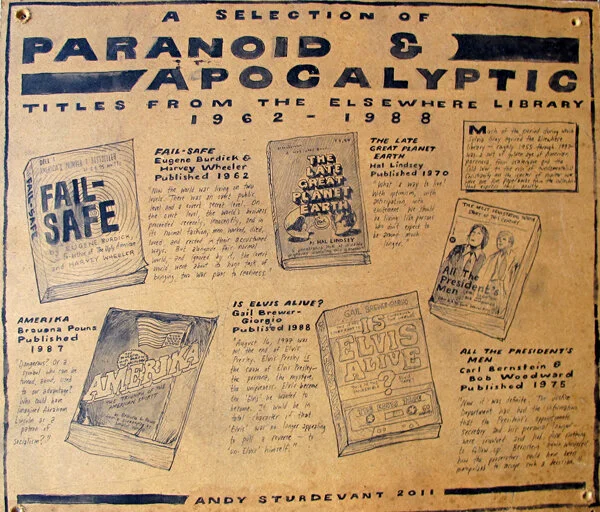
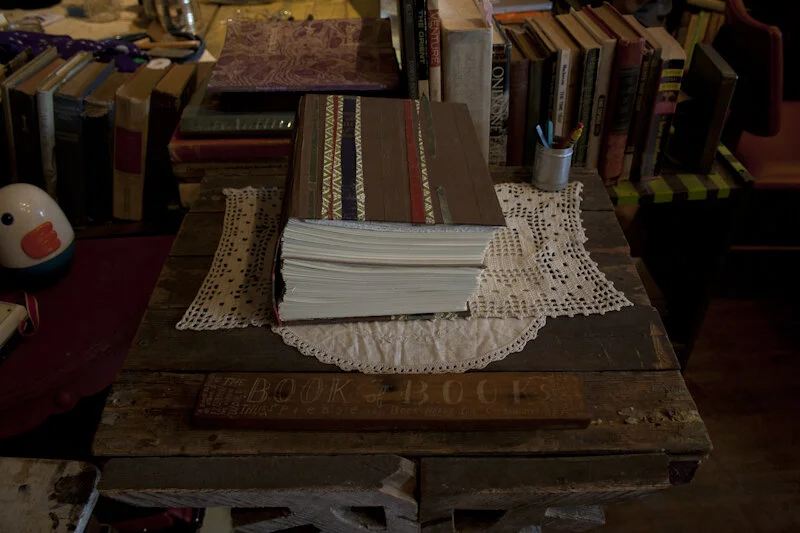
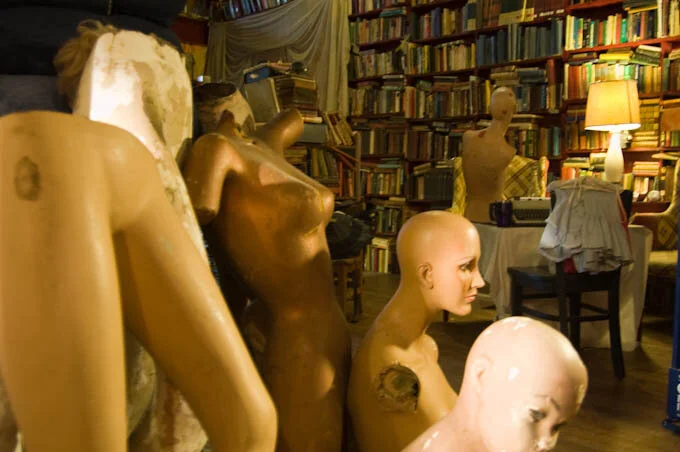
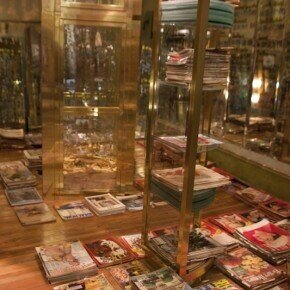
Elsewhere’s library houses a collection of thousands of vintage books. While they can’t be checked out, the books and collection magazines can be scanned to contribute to the shared information archive.
![[Insert Title] | Rebecca Noone](https://images.squarespace-cdn.com/content/v1/5ef1e060a980b2706df431b2/1614917716327-8XQDKPNFPIWTQ165R3H8/20130622-Wiseman-Elsewhere-InsertTitle-55-800x529.jpg)




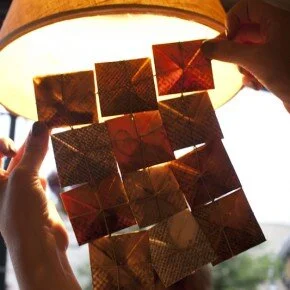
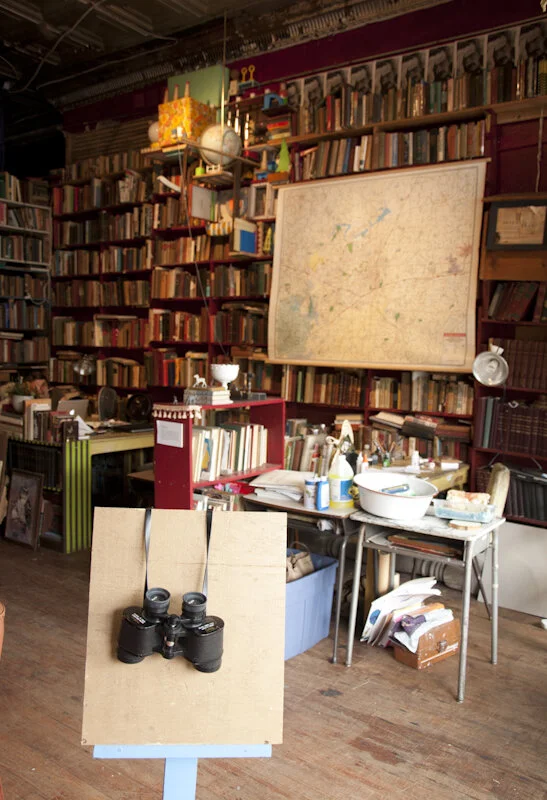


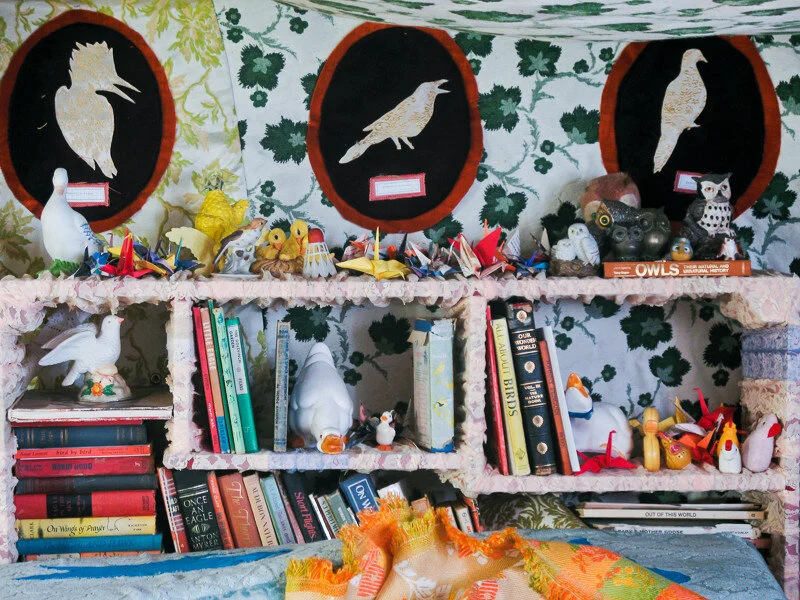

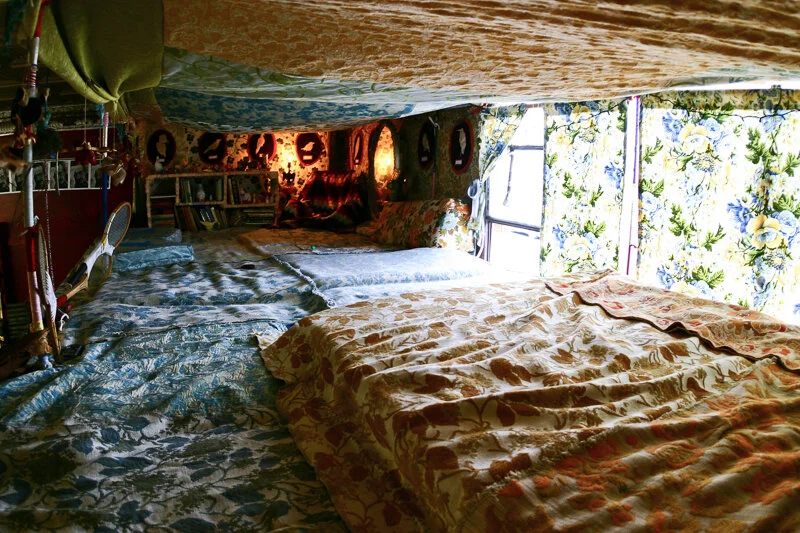
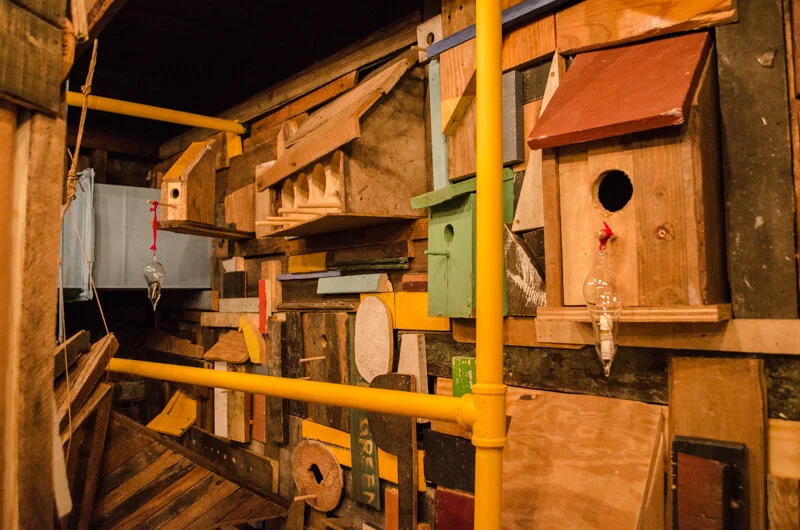
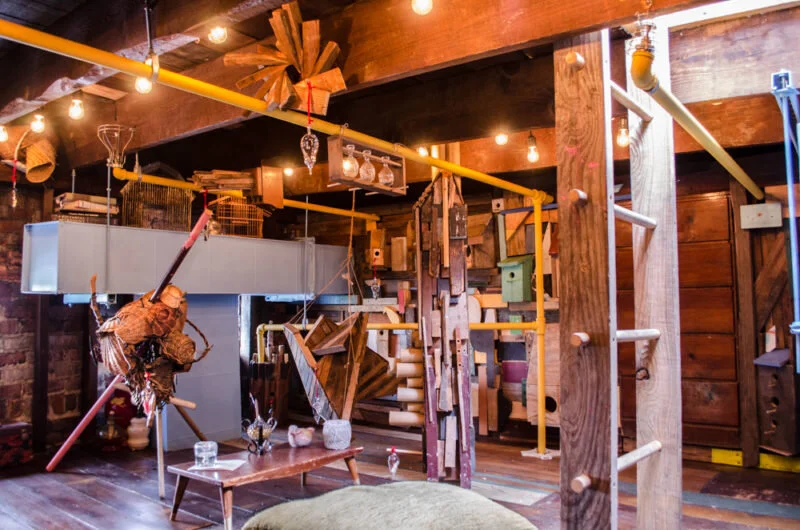
The Aviary is an interstitial space built to balance the public/private nature of making at Elsewhere’s Living Museum. Beginning with the construction of the First Ladder, an abandoned lofted space in the Living Museum was transformed into an observational respite for the Elsewhere community. The space offered a twin-lookout system; street side of Greensboro and Elsewhere’s evolving sprawling library. From its subtle upper vantage, the performative community had an opportunity to observe audience interaction and exploration. The Aviary also included a curated collection of all things feathered, an encyclopedic avian library, educational textile-based portraits of regional birds, comfortable reading chairs, the coziest corners, one pair of binoculars, and plenty of secrets. Archived Project Page here.
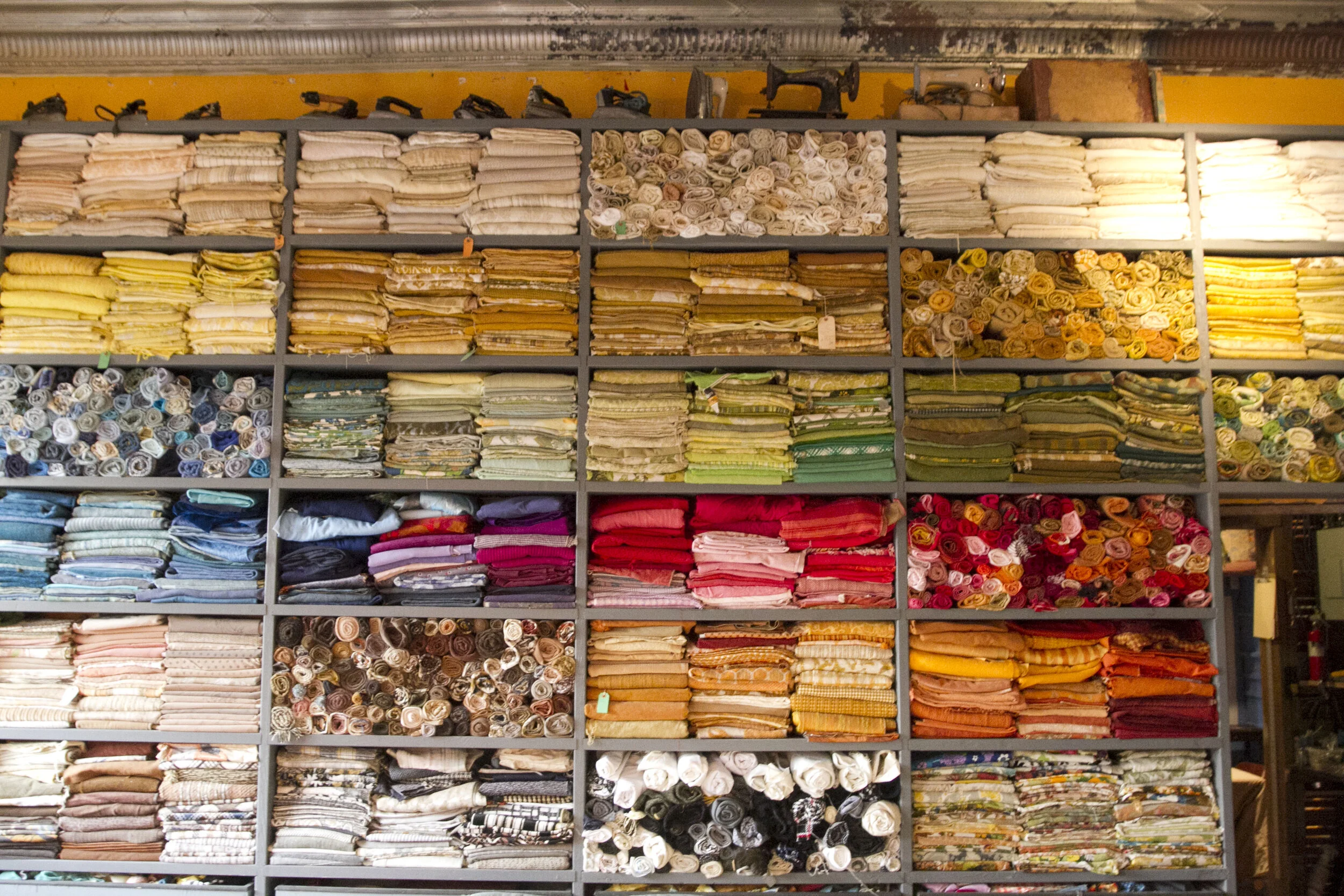
The fabric workshop houses part of the tremendous collection of vintage textiles (the bolts are stored in the 3rd floor warehouse). There are also large tables, sewing machines, and bins full of scrap that can be utilized in soft and plush projects.
The fabric workshop was constructed with Frau Fiber (artist Carol Lunge) who worked with local textile workers to create a quilt about the history of factory production in North Carolina.

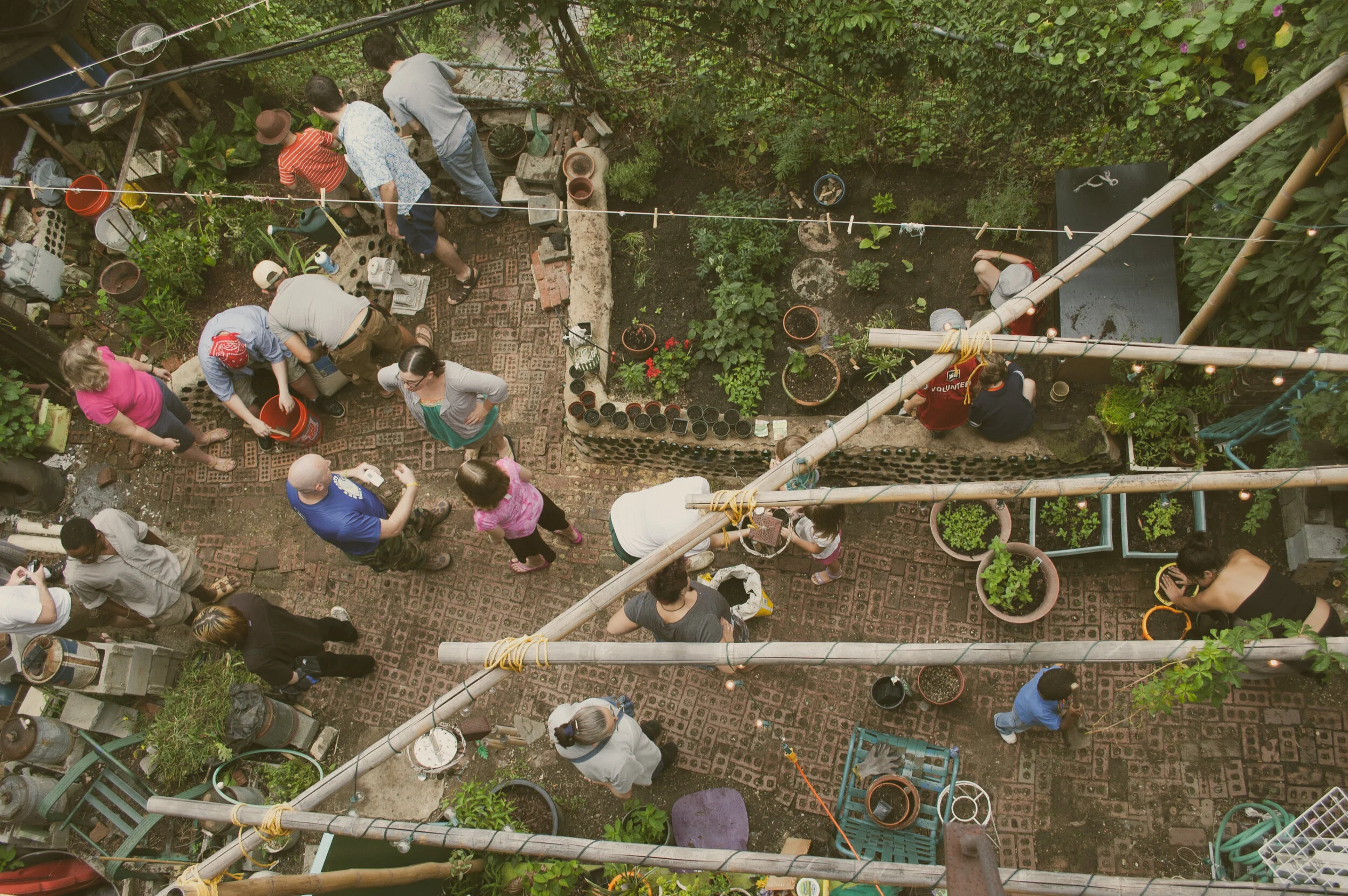
Garden
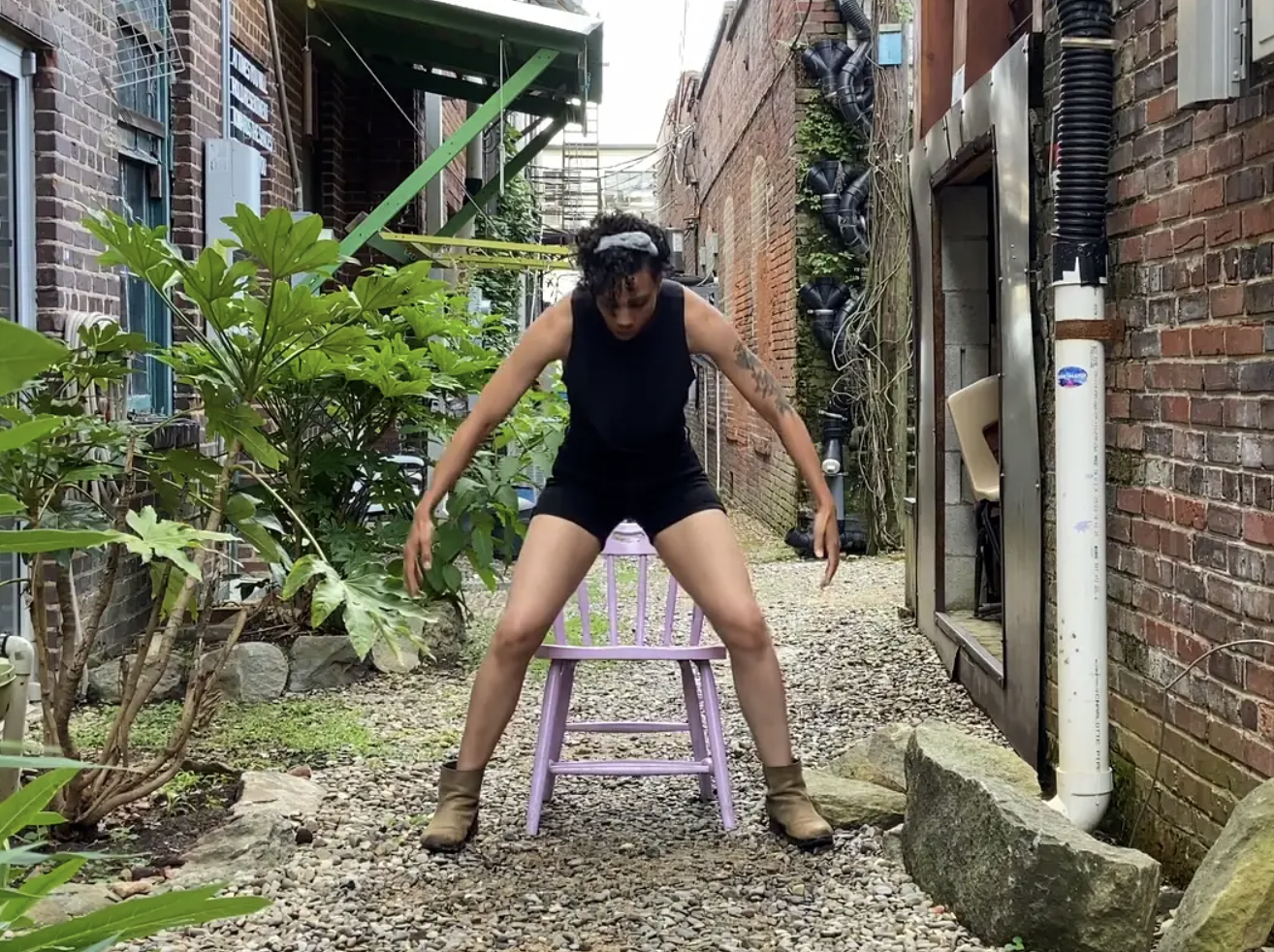
Elsewhere’s garden hosts a wide array of spaces for convening, growing, and connecting, offering respite from the world of things within. The garden is a public alley garden that runs behind the buildings, shared with the makerspace and education space next door.
The Garden was first developed with a Future Fund grant in 2016 as part of an Urban Green Initiative, with an ArtPlace America grant to build out the entire space in 2014.
Back Facade
Ladders to nowhere
2ND FLOOR
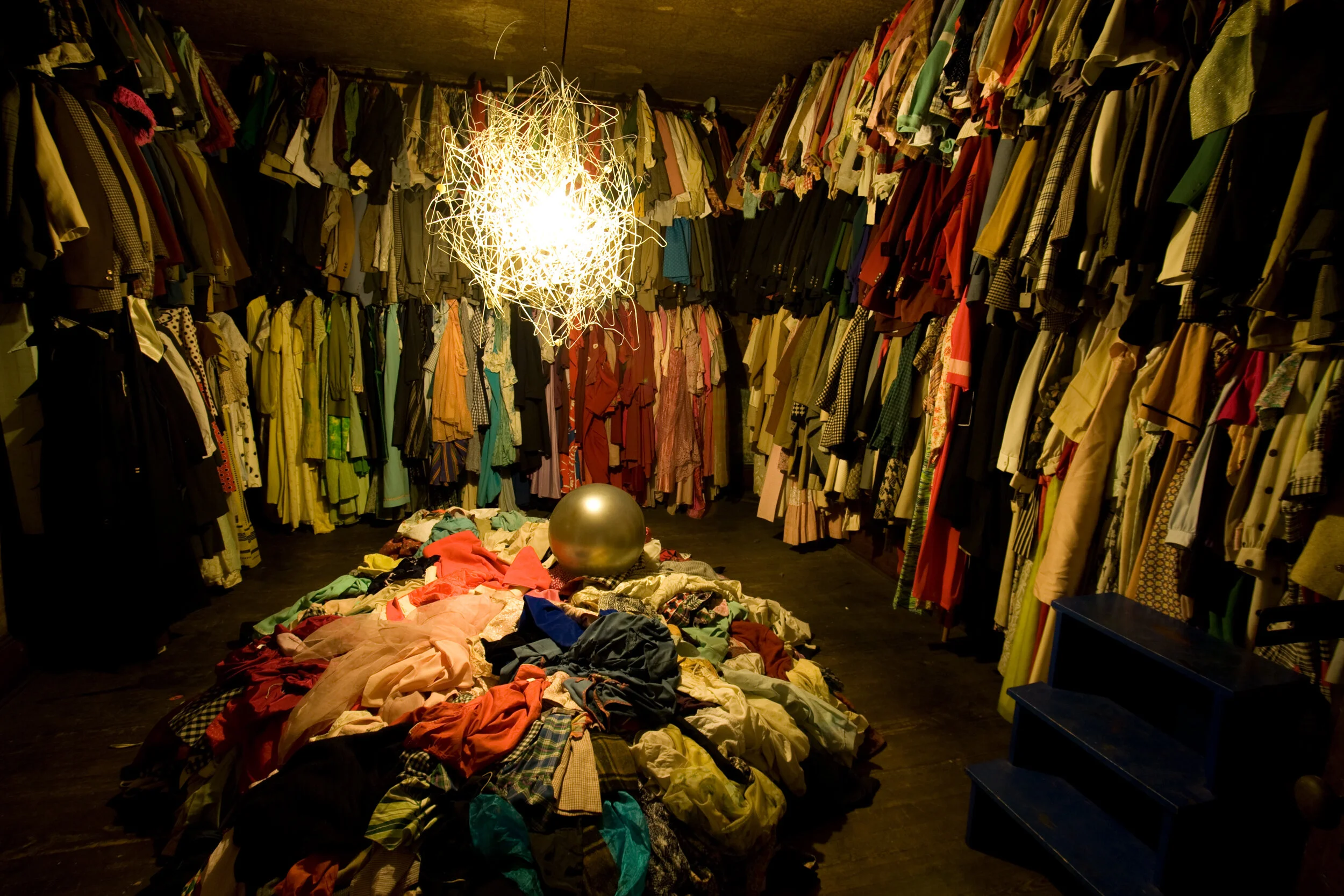
The Wardrobe
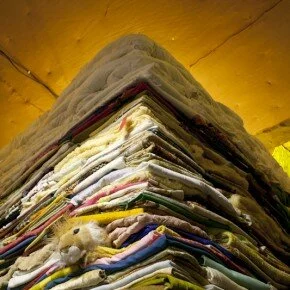
Elsewhere’s closet holds a multi-layered deep room full of clothing, hats, accessories that Elsewherians can wear during their stay, and that visiting creators can use for costumes, photo shoots. Sylvia notoriously cut buttons off of dresses and coats, so don’t be surprised if you discover items without fastenings. The collection spans mostly from the 50s and afterwards.
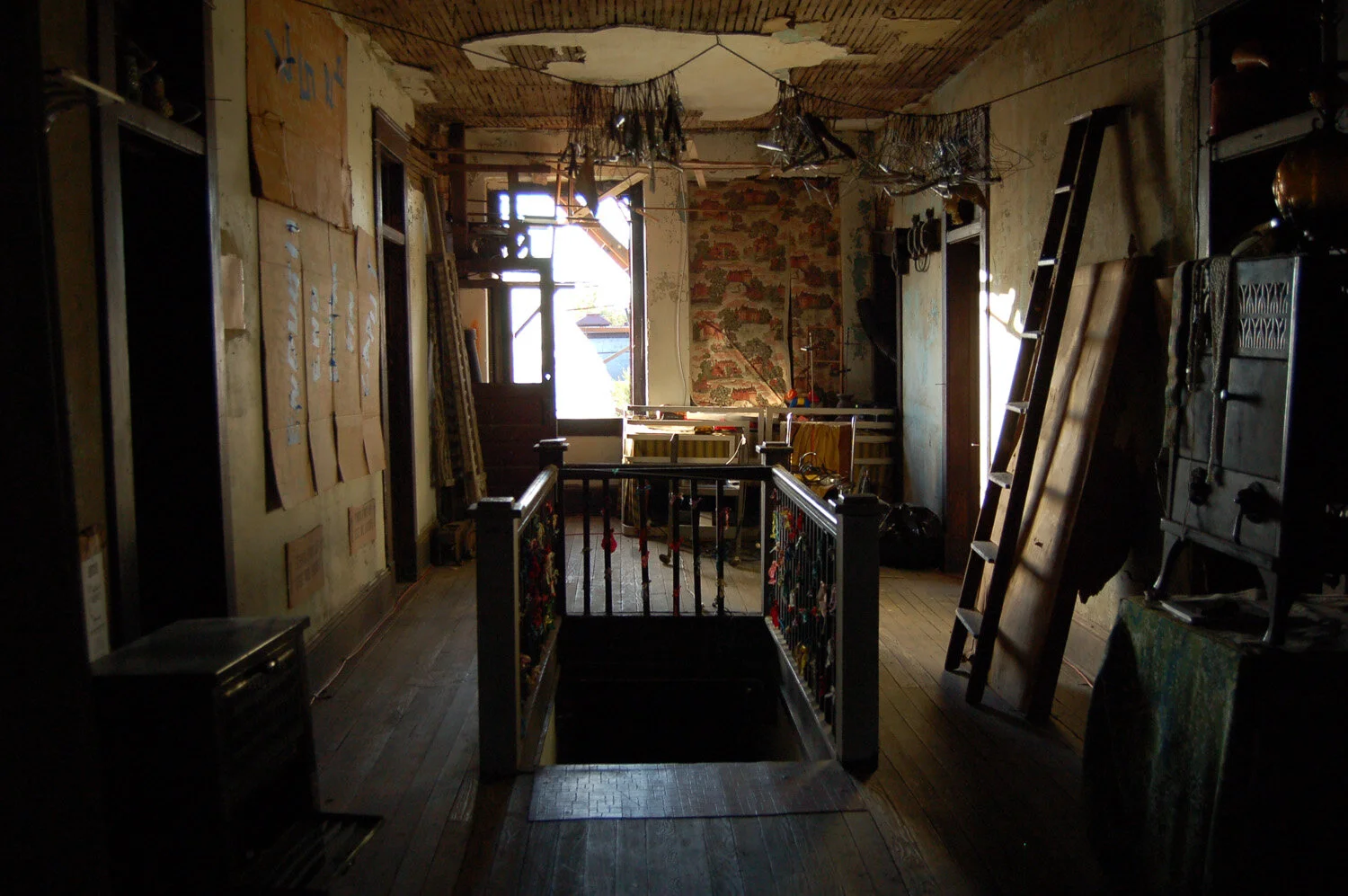
Boarding House
The Boarding house on Elsewhere’s second floor was originally a 14-room boarding house with 4-family apartments (a living room, bedroom, and kitchen) with two bathrooms at the end of the hall. Now it is home to rooms for Elsewhere’s residents, as well as a few installations.
Interested in booking an overnight or creative retreat? Email museum@goelsewhere.org
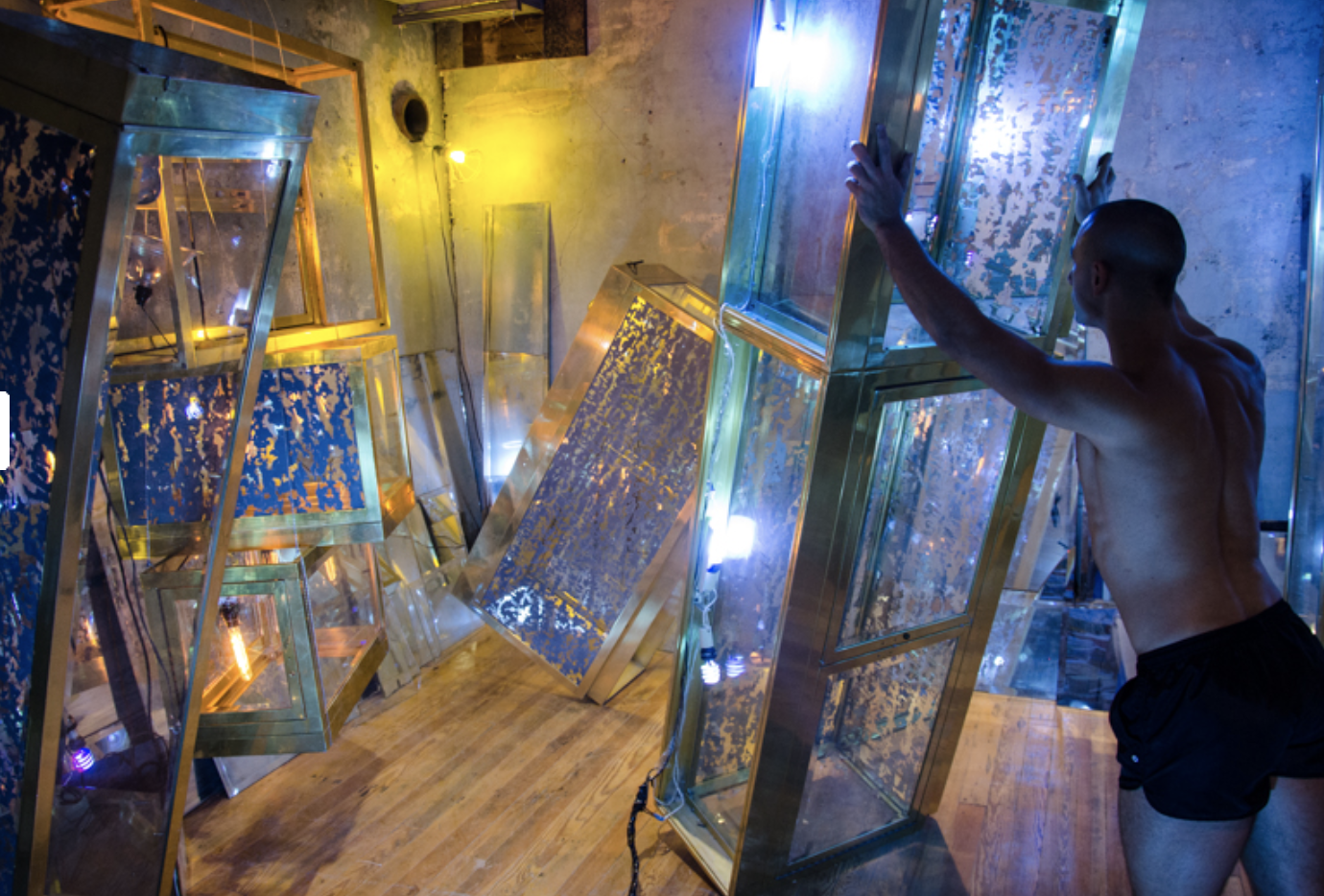
Glass Forest
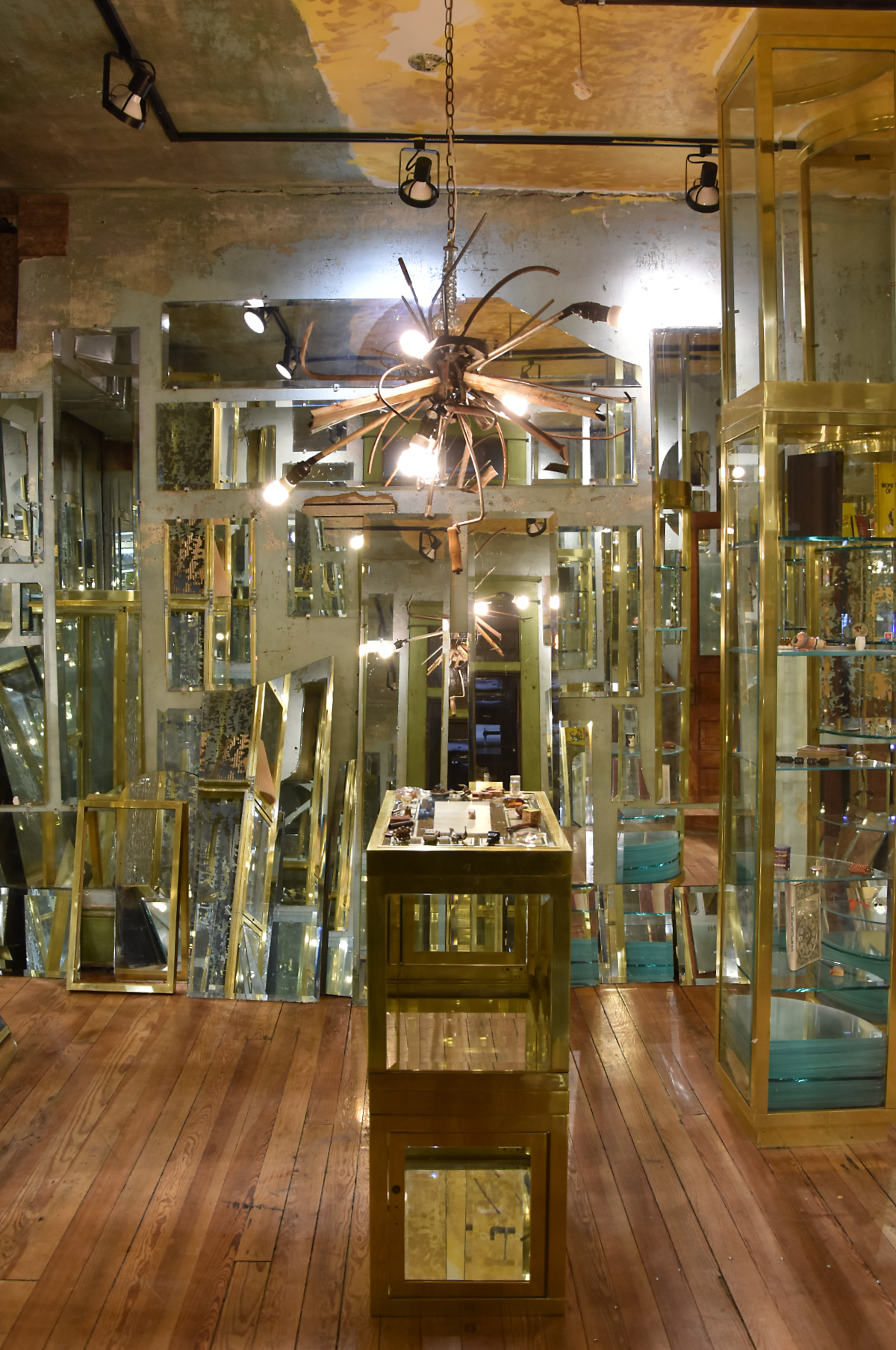
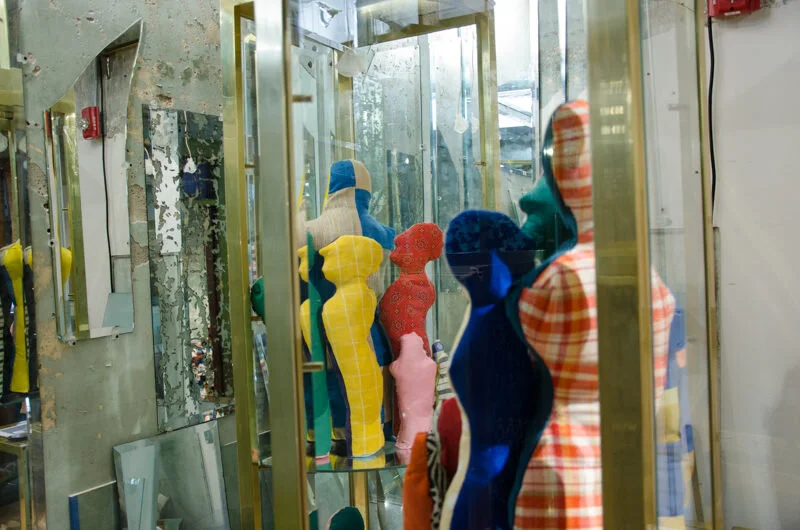
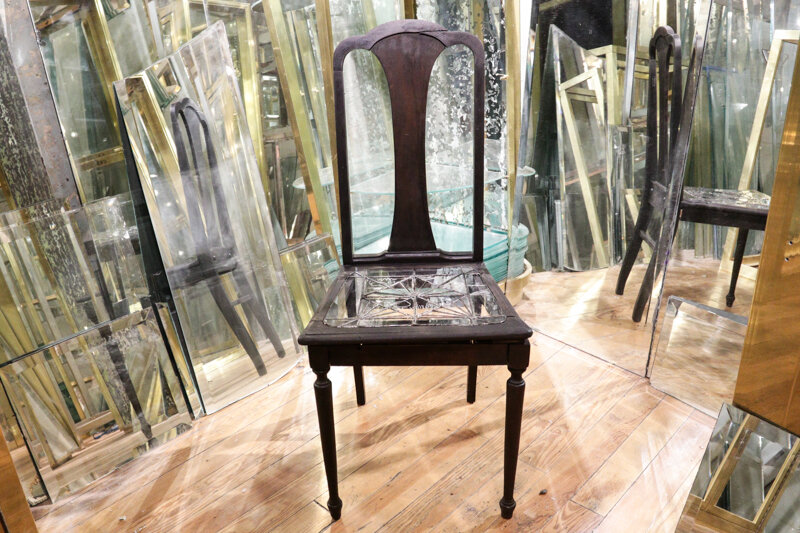
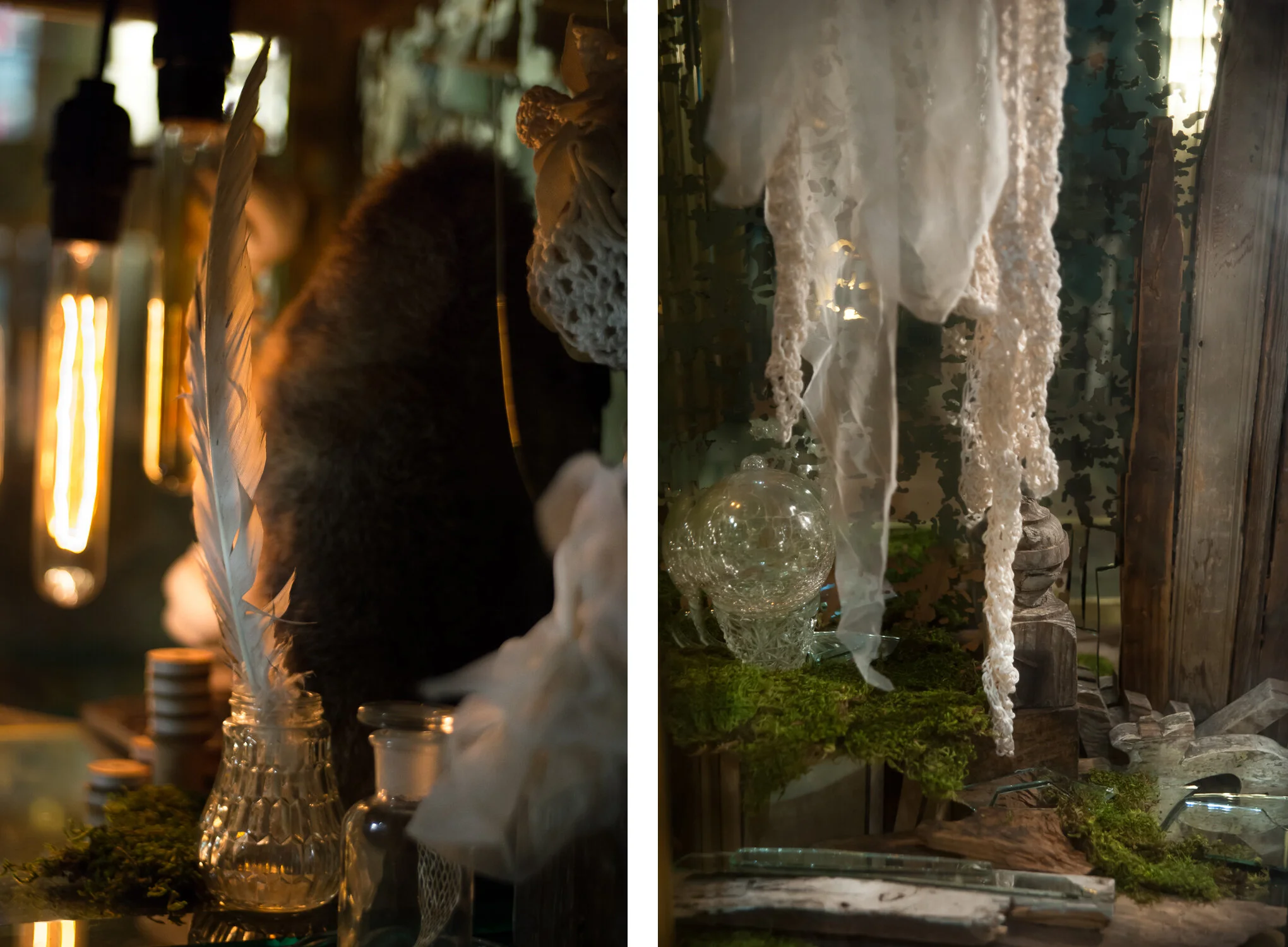
Glass Forest was a collaborative work created by resident Agustina Woodgate and our former building curator Ian Montgomery. See the archived project page here.
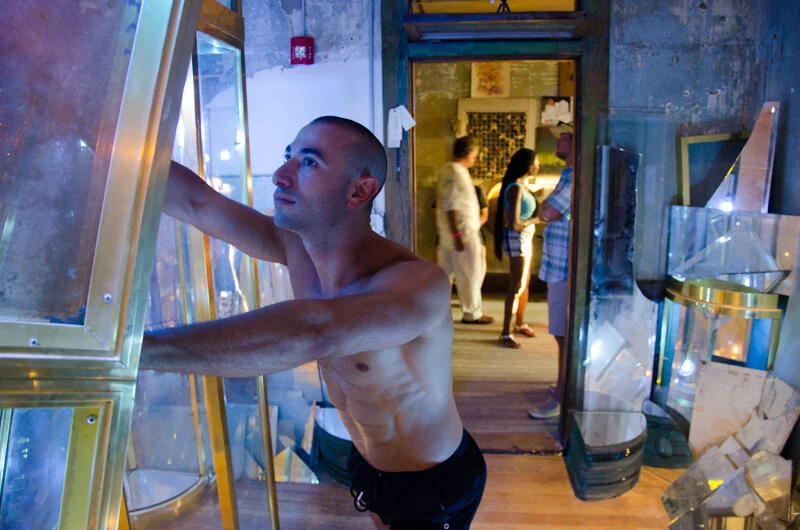
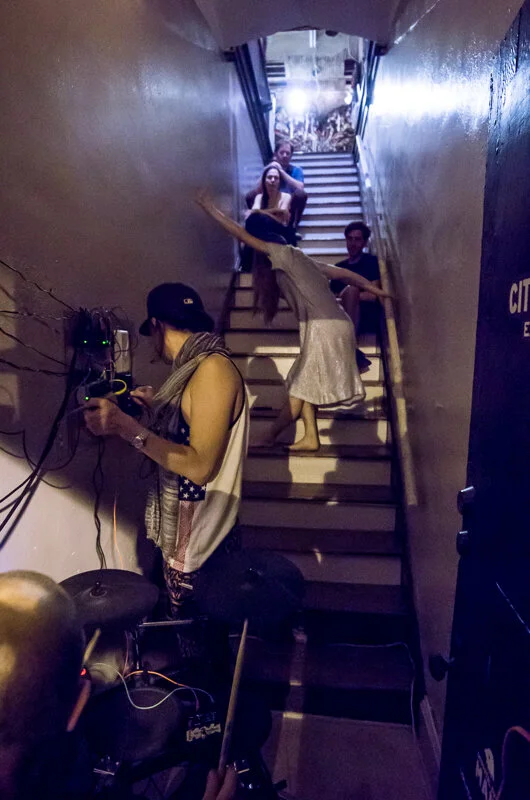
This image is from Pioneer Winter’s durational performance called 13 hours. See the archived project page with video here.



Alone Zone
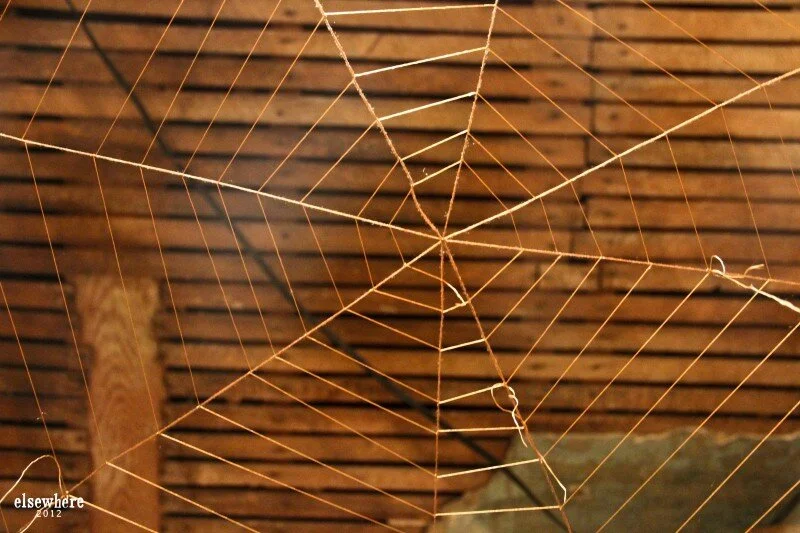
The Alone Zone is a space within a space that preconditions a quieting of the spirit. The concept is reflected in the construction. It is literally a room in a larger building eating a smaller building. By mediating the participant’s relationship to the larger space of Elsewhere, Resident Julia Garder created a situation for reflection and decompression. See the archived project page here.
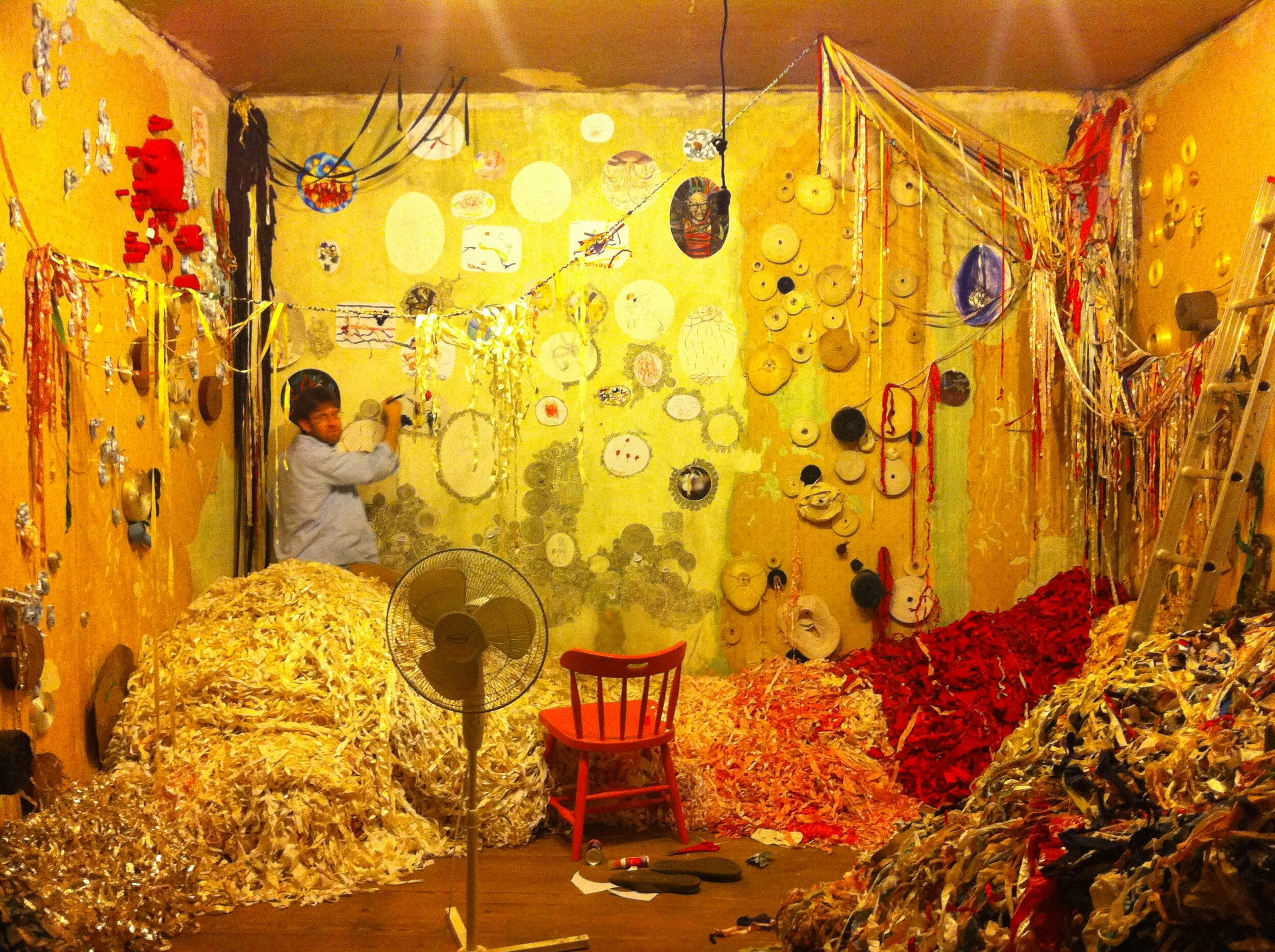
Ribbon Room
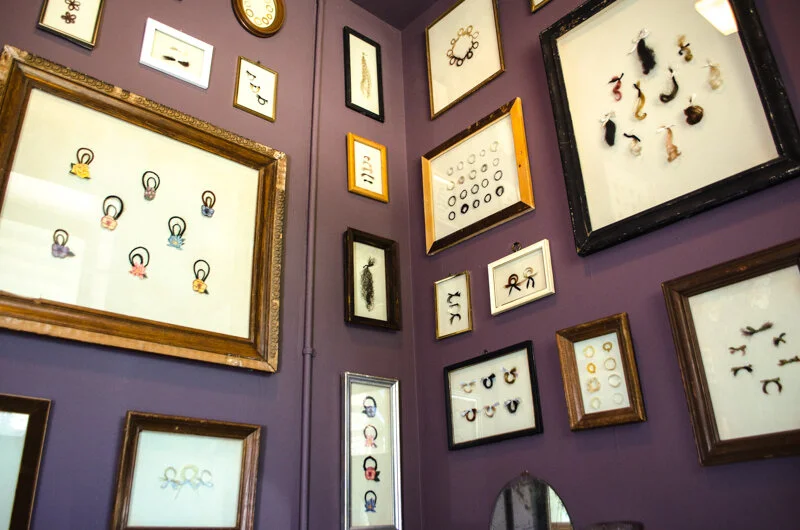
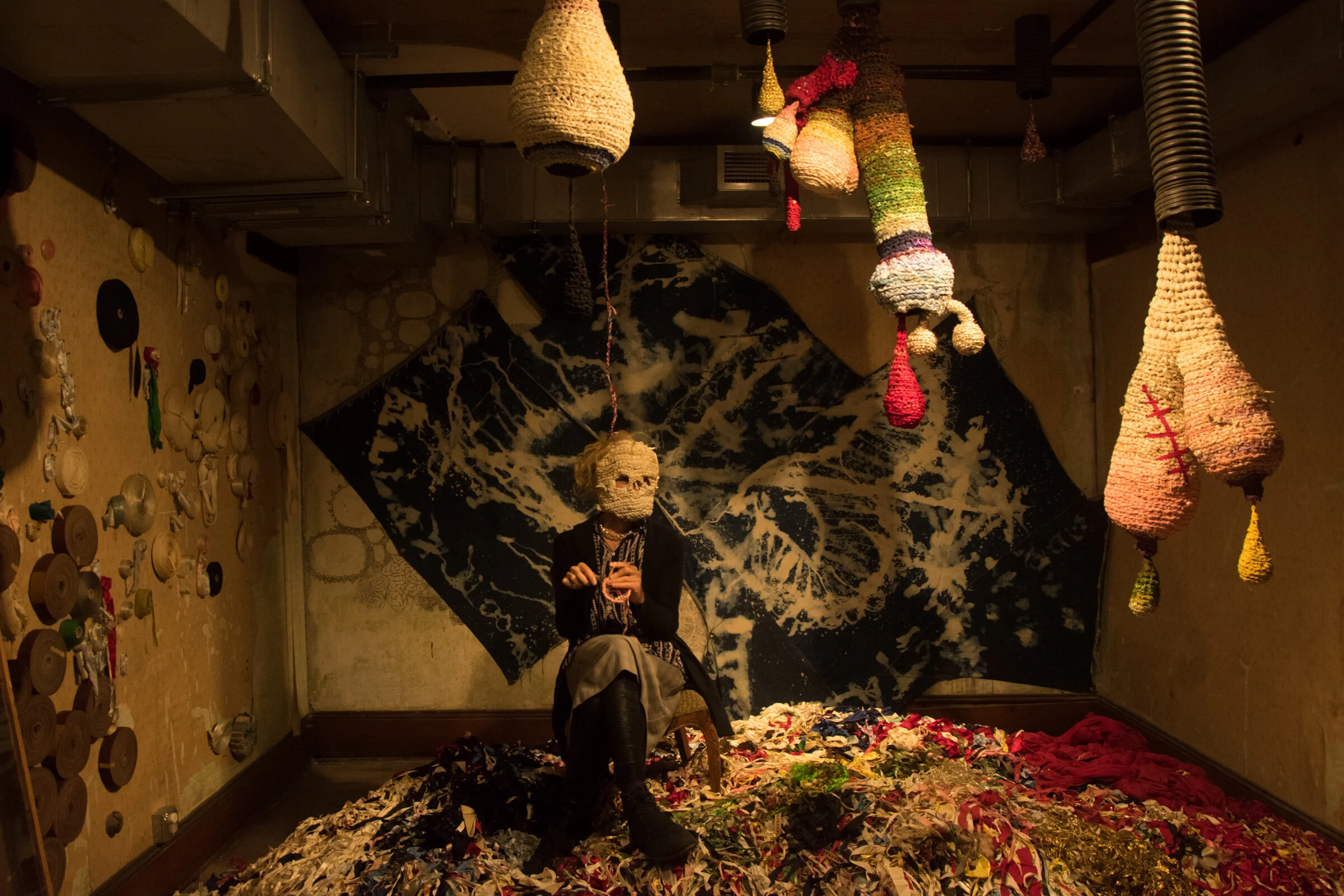
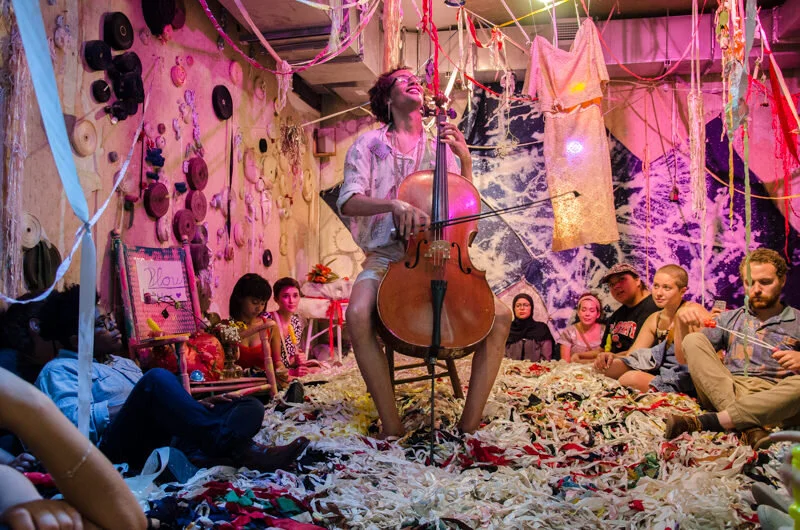
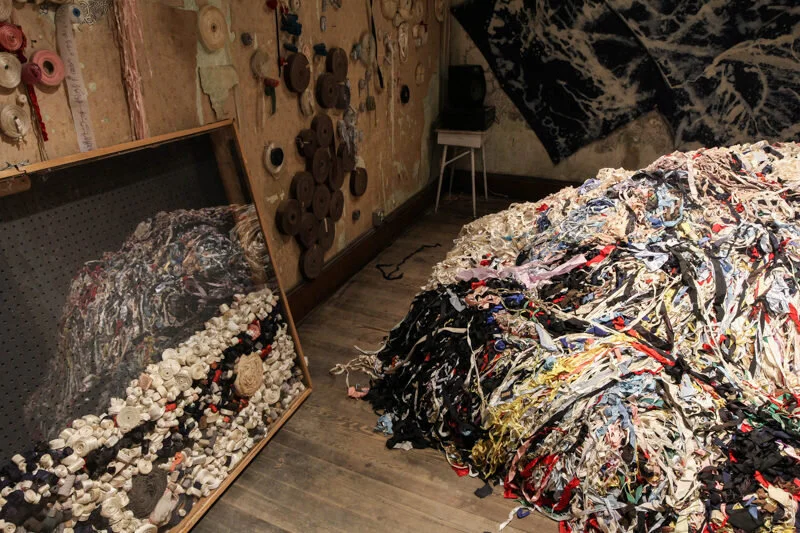
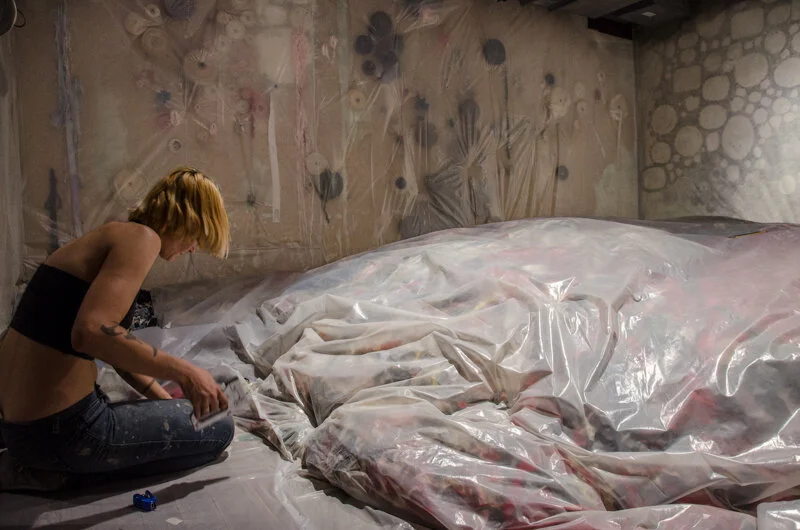
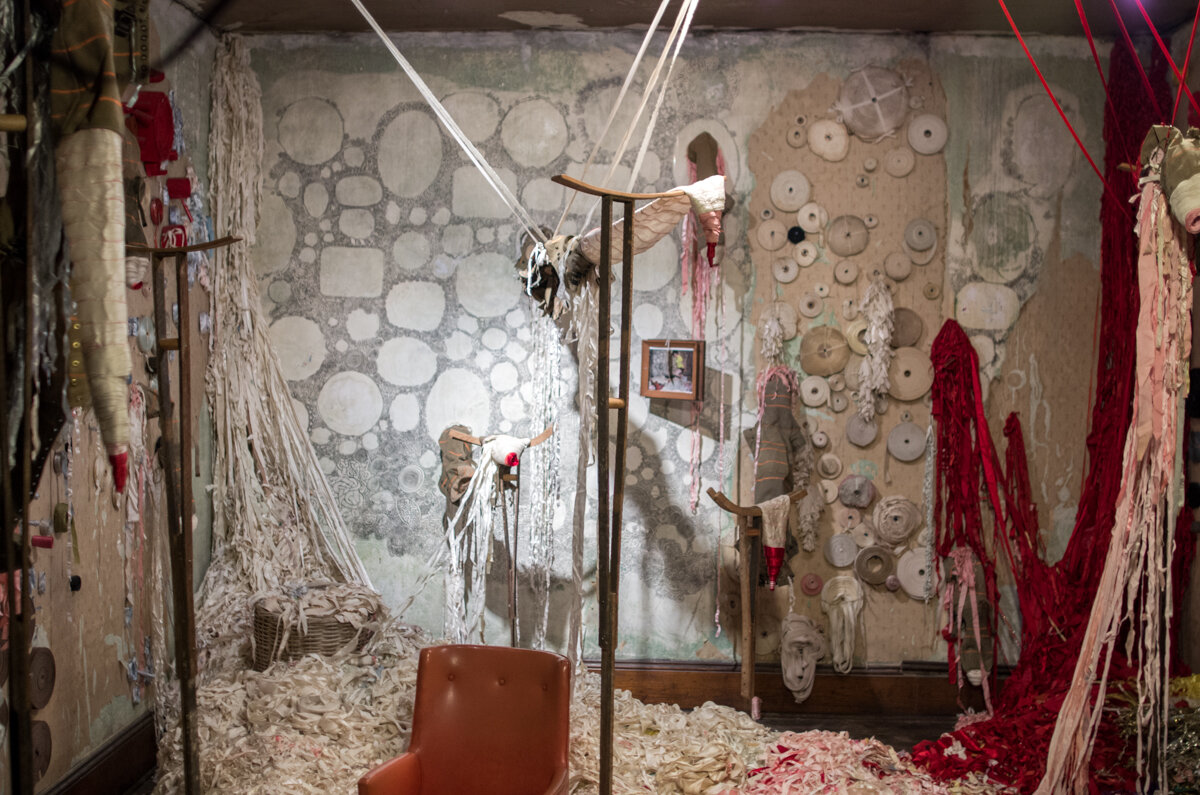
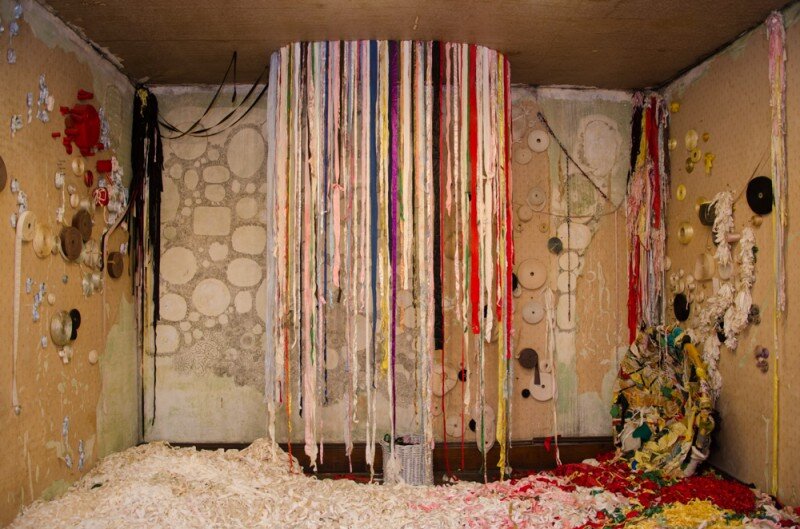
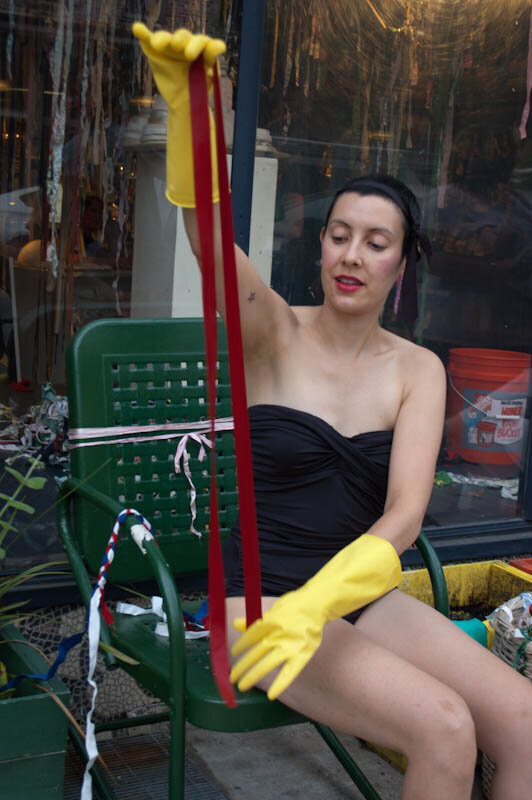
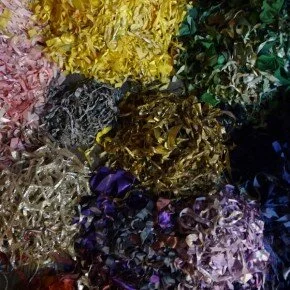
Sylvia Gray collected finishing ribbons from textile manufacturers across North Carolina. Sylvia used to take the ribbons home from her store and wash them, iron them, and roll them around a pencil. She compiled a room full of ribbons of many colors and sizes. The Ribbon Room has been the site of many artist projects and collaborative meditations, as ribbon rolling is a favored past time.

3RD FLOOR

Ghost Room
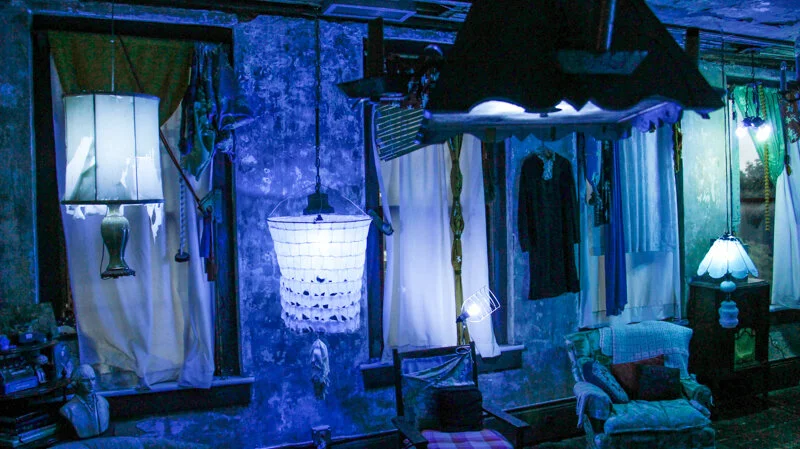
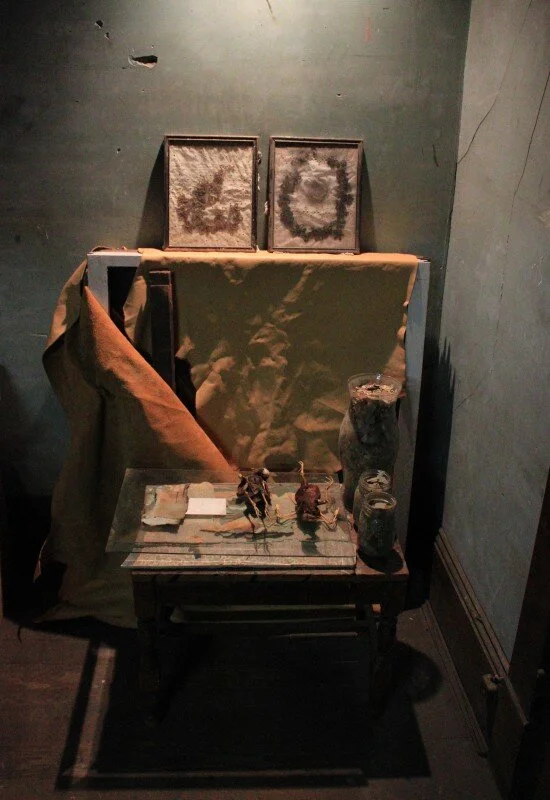
The ghost room is the most haunted room in the house.
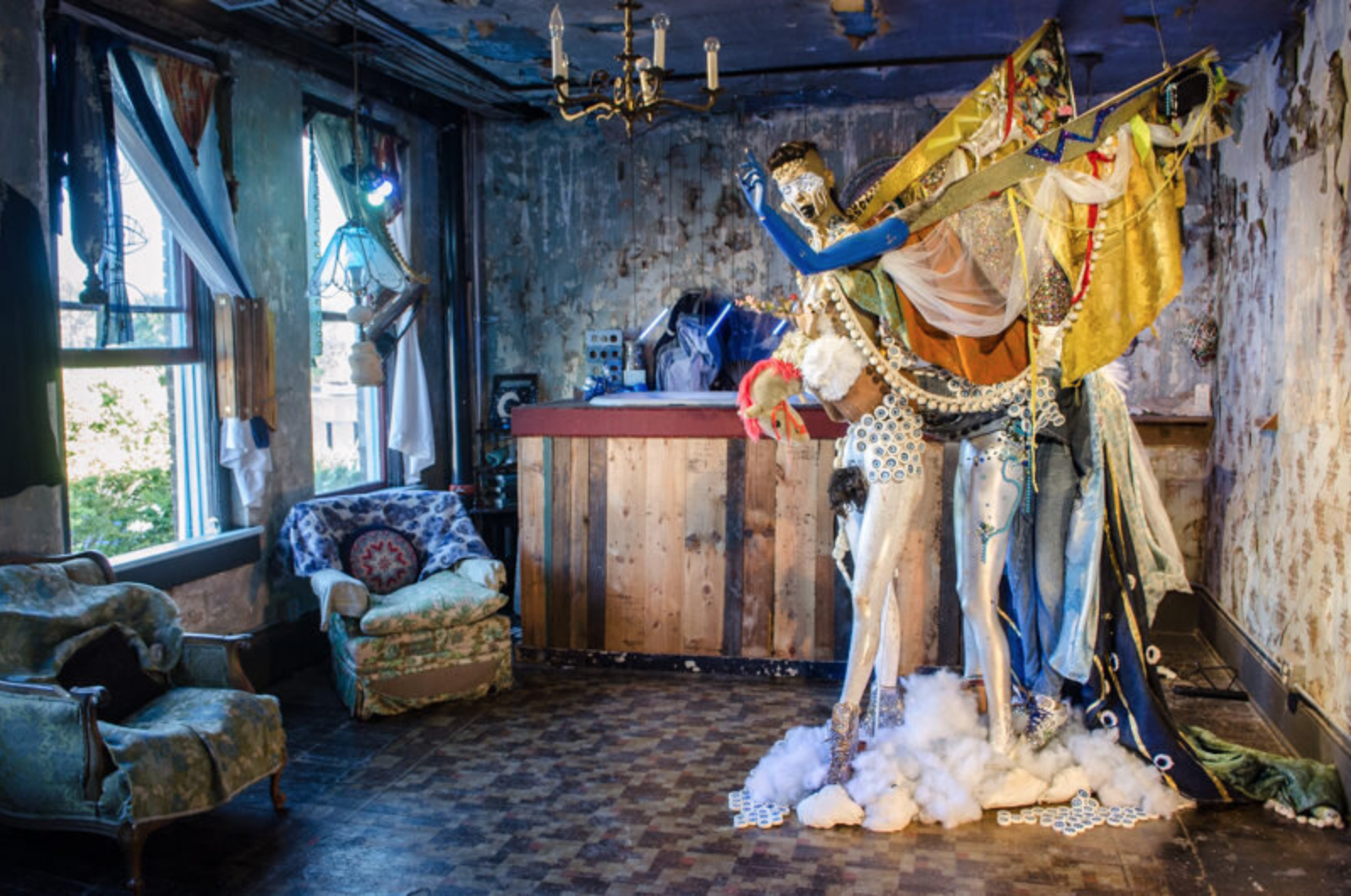
The creature featured in this image is a Buraq made by Saba Taj (2017 Southern Constellations Fellow) - see archive project page for “Interstellar Uber//Negotiations with God here.
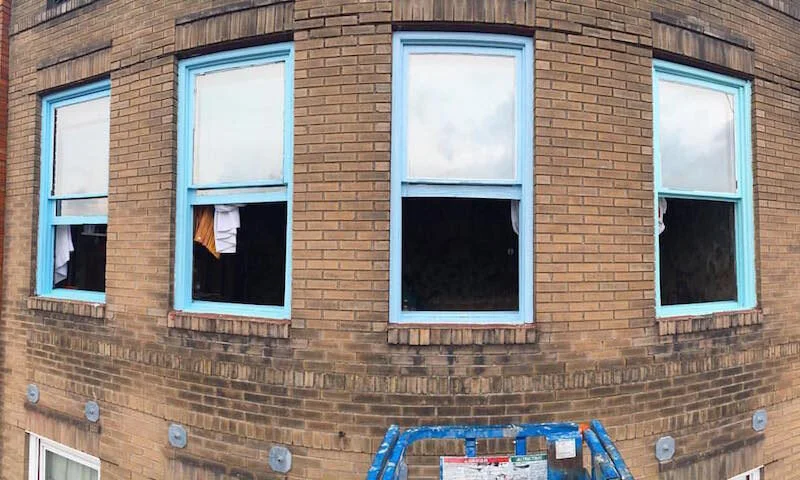
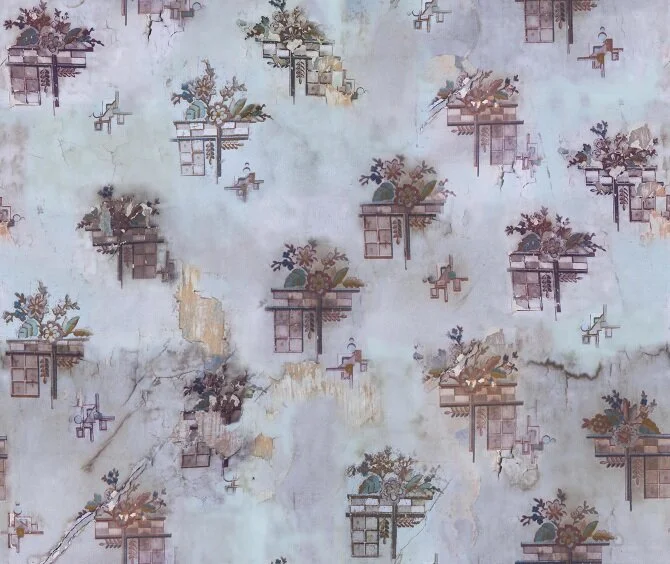
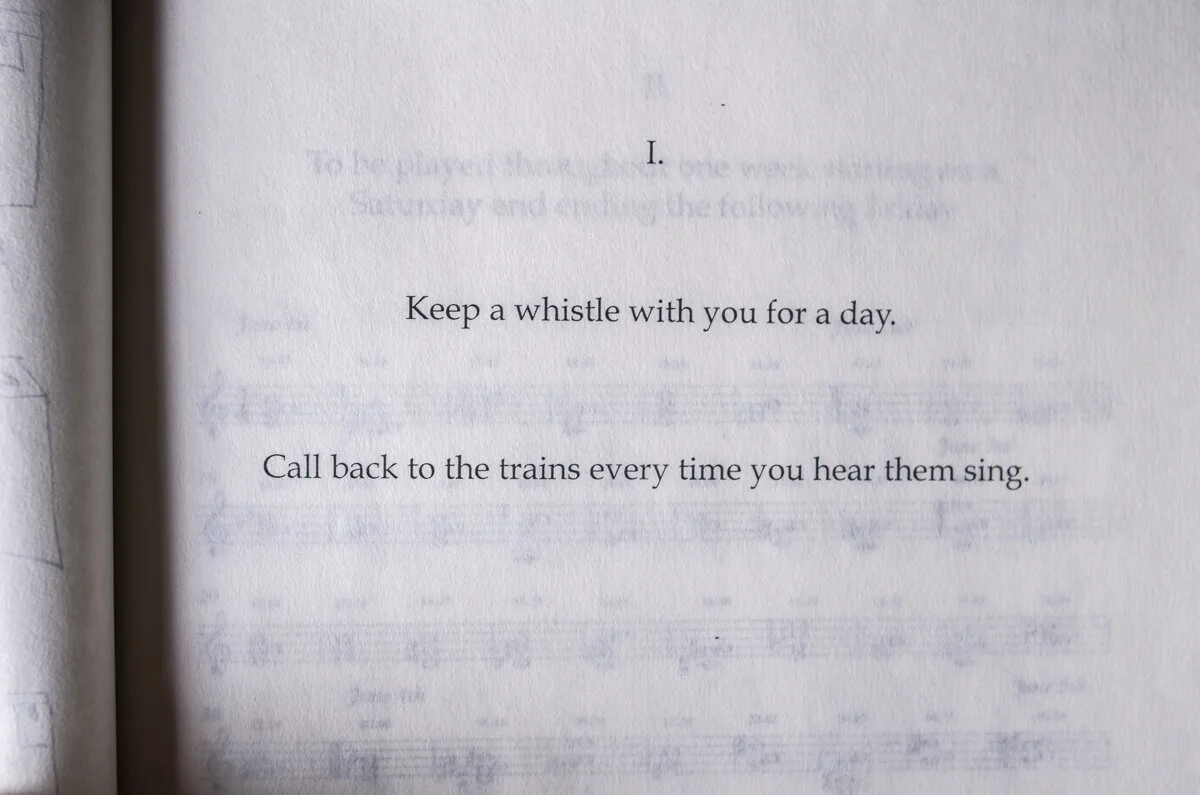
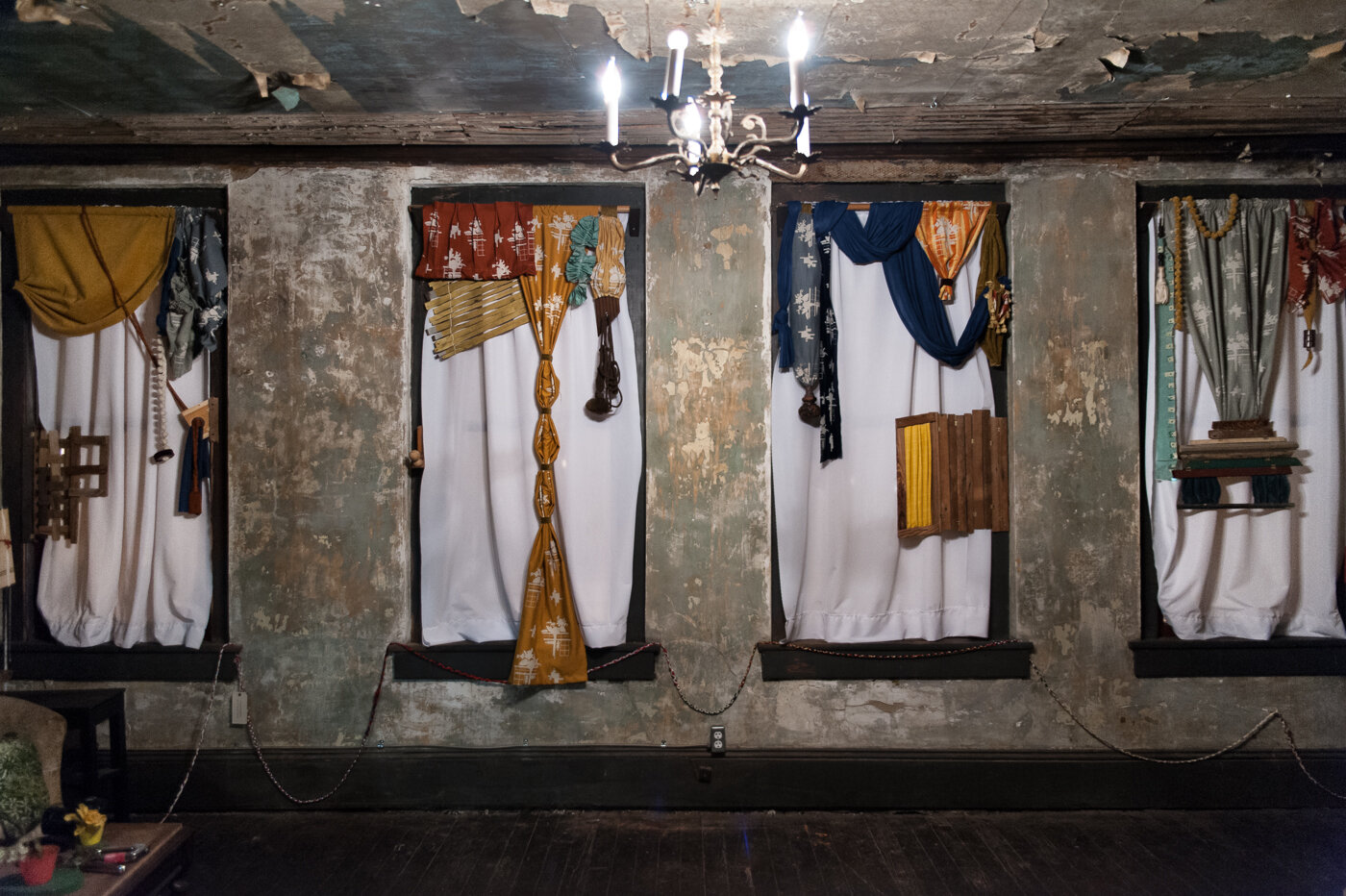
Maria Molteni (2016 Southern Constellations Fellow) engaged extensively with the Ghost room, including painting the window frames and bare patches introducing the histories and practices of Haint Blue to Elsewhere. Molteni writes about Haint Blue and shares a recipe in this downloadable artist cookbook; more writing about it on their website here; and archived Project Page here.



Records Room aka Archive Room aka Historical Society
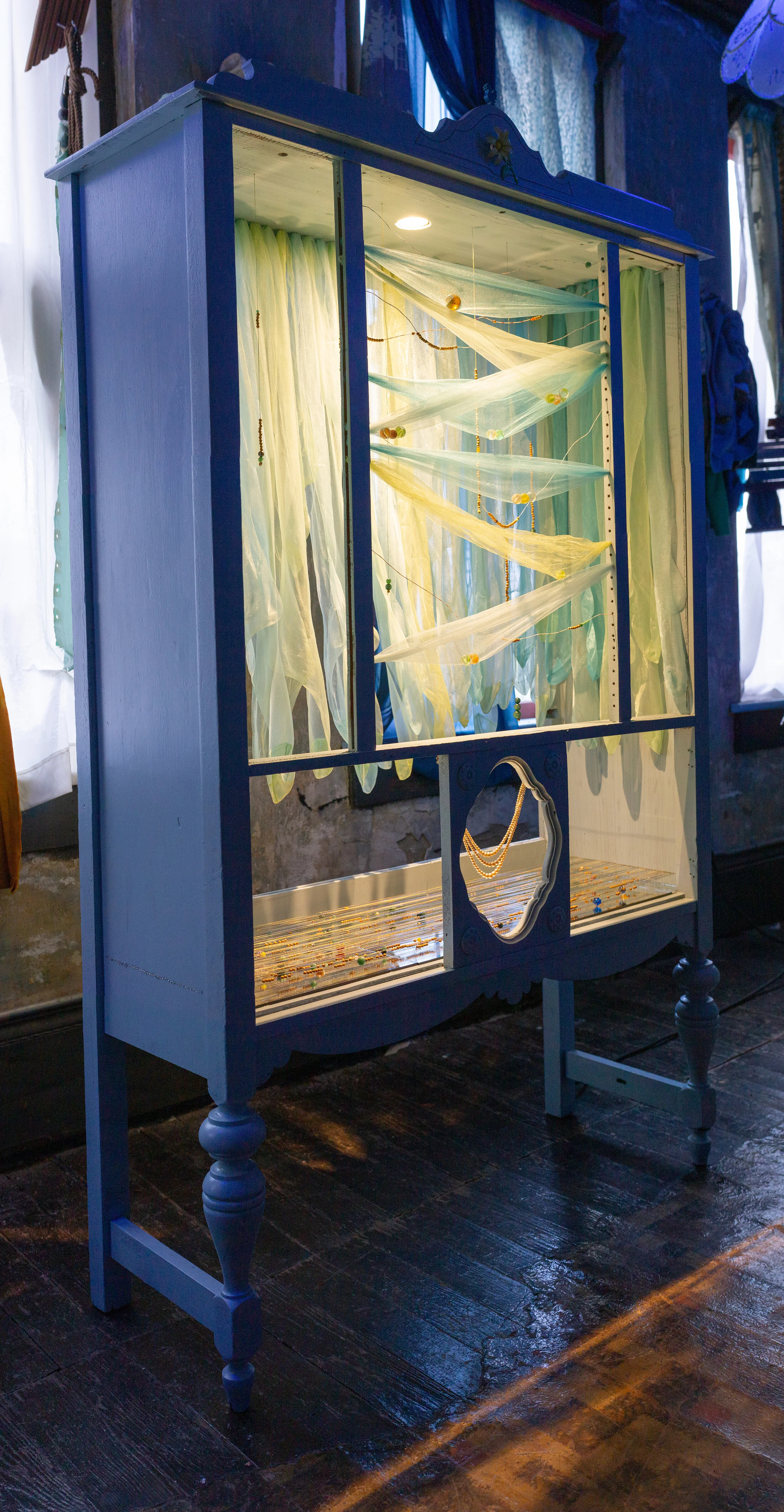
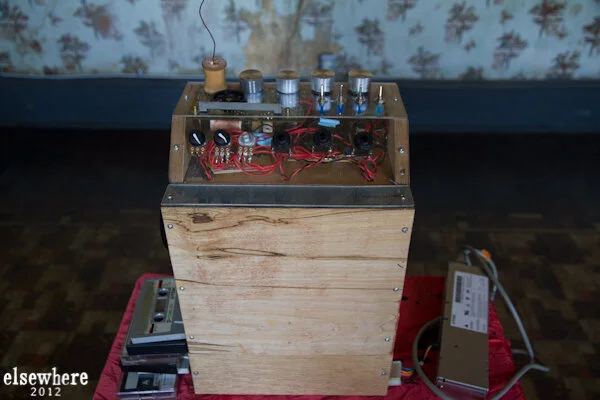
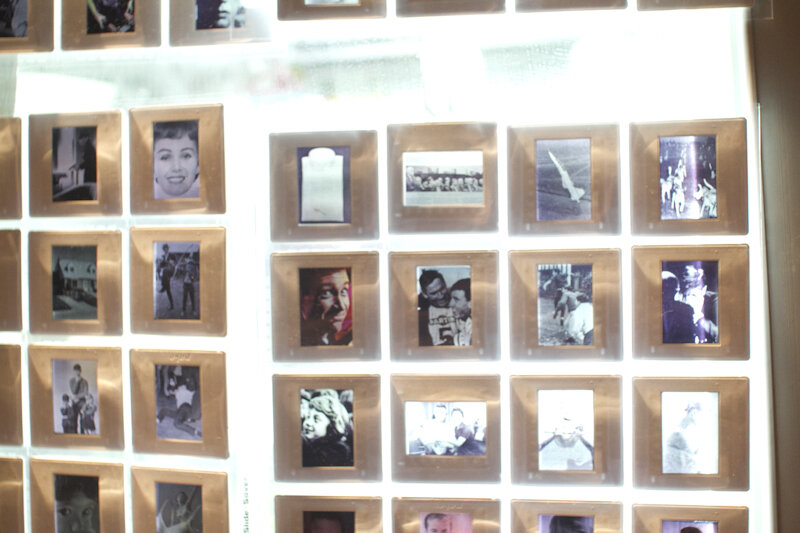
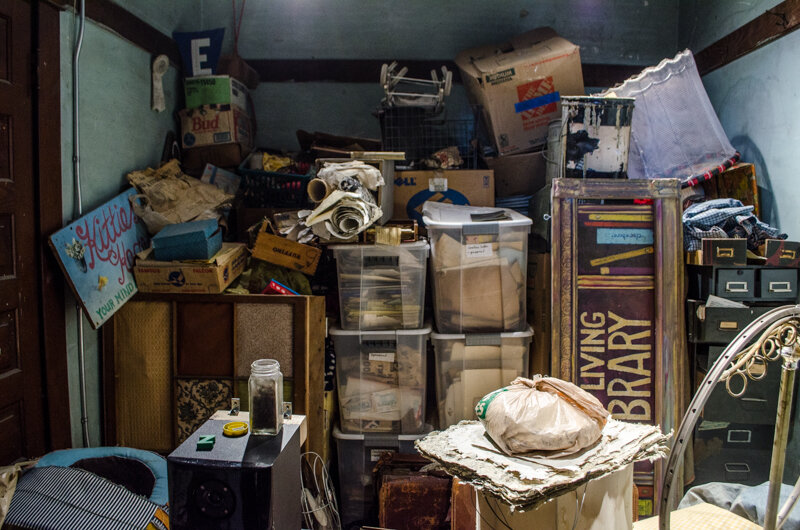
This room houses the collection of papers, largely from the days of Joe Gray and the Army Surplus and Catalog Sales company. The historical archives have preserved pamphlets of papers, letters, photographs, and other detritus found throughout Elsewhere.
Interested in helping Elsewhere with archiving initiatives? Contact museum@goelsewhere.org
ABOVE