Explore
Elsewhere’s collection includes approximately 10,000 articles of army surplus from World War II and the Korean War, 10,000 bolts of vintage fabric, 20,000 items of vintage clothing dating from 1950 to 1997, 20,000 books from the 1950’s onwards, 2,000 assorted dish-wares and 2,000 more kitchen objects, tools, machinery, and sewing items, and thousands more toys, knick-knacks and ephemera. Everything that was in and a part of the building at the time the store closed in 1997 is what we refer to as “the collection.”
VIRTUAL COLLECTION
PHOTO ARCHIVE VIMEO FLICKR
Ground Floor

The front window has always been perhaps the most crucial intersection between the museum and Elm street. The opening front window was installed for three important reasons—to create a stage for street performance, to offer a community front porch, and to allow air to flow through the building before the days of air conditioning. Yes, there are swings that go in and out of the building.
Want to perform in the theater? Contact museum@goelsewhere.org.

The front façade of Elsewhere is its face to the world and a massive canvas for a number of artist’s works. A place to make statements and get a look inside the museum.


The fabric workshop houses part of the tremendous collection of vintage textiles (the bolts are stored in the 3rd floor warehouse). There are also large tables, sewing machines, and bins full of scrap that can be utilized in soft and plush projects.
The fabric workshop was constructed with Frau Fiber (artist Carol Lunge) who worked with local textile workers to create a quilt about the history of factory production in North Carolina.

Elsewhere’s kitchen is a place for shared meals and dining experiments. Artists-in-residence dine together on vegetarian delectables, and help themselves to breakfast and lunches. Each member cooks once a week for the group dinner, and everyone cleans together after every meal. The kitchen also hosts lots of special events, from fancy dinners led by artists, special rentals, iron chef competitions, and more.
In 2011 artist J Morgan Puett and collaborator Ian Montgomery designed and implemented a fully functional kitchen restoration, calling it The Kitchen Commons.
Interested in cooking or hosting Elsewhere? We welcome rentals, chefs-in-residence, and workshops. Contact museum@goelsewhere.org.


Elsewhere’s library houses a collection of thousands of vintage books. While they can’t be checked out, the books and collection magazines can be scanned to contribute to the shared information archive.

Elsewhere’s garden hosts a wide array of spaces for convening, growing, and connecting, offering respite from the world of things within. The garden is a public alley garden that runs behind the buildings, shared with the makerspace and education space next door.
The Garden was first developed with a Future Fund grant in 2016 as part of an Urban Green Initiative, with an ArtPlace America grant to build out the entire space in 2014.
2nd Floor
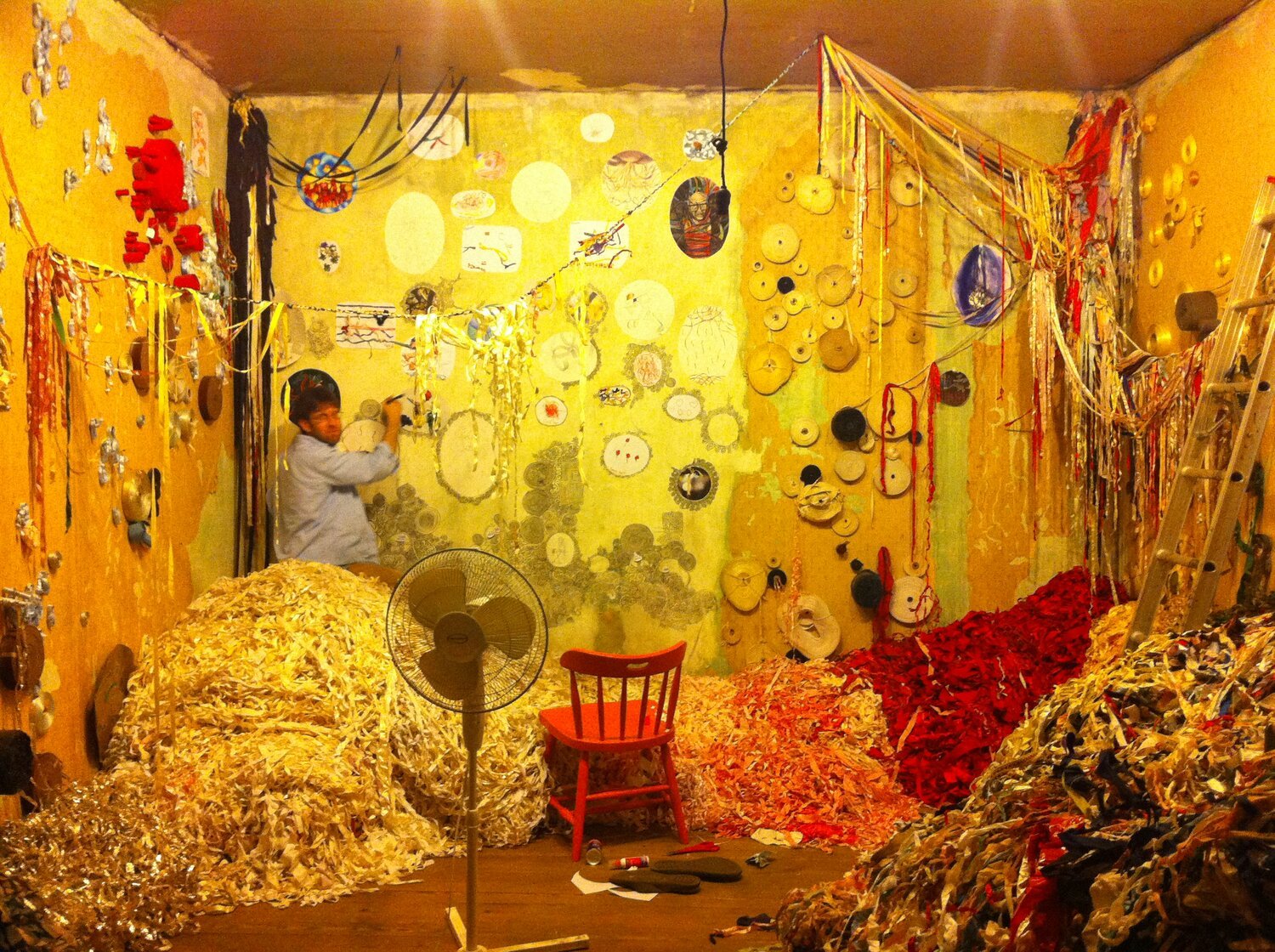
Sylvia Gray collected finishing ribbons from textile manufacturers across North Carolina. Sylvia used to take the ribbons home from her store and wash them, iron them, and roll them around a pencil. She compiled a room full of ribbons of many colors and sizes. The Ribbon Room has been the site of many artist projects and collaborative meditations, as ribbon rolling is a favored past time.

The Alone Zone is a space within a space that preconditions a quieting of the spirit. Resident Julia Garder created the original Alone Zone space.

The Glass Forest gets its name from the collaborative work created by resident Agustina Woodgate and our former building curator Ian Montgomery.

The Boarding house on Elsewhere’s second floor was originally a 14-room boarding house with 4-family apartments (a living room, bedroom, and kitchen) with two bathrooms at the end of the hall. Now it is home to rooms for Elsewhere’s residents, as well as a few installations.
Interested in booking an overnight or creative retreat? Email museum@goelsewhere.org.
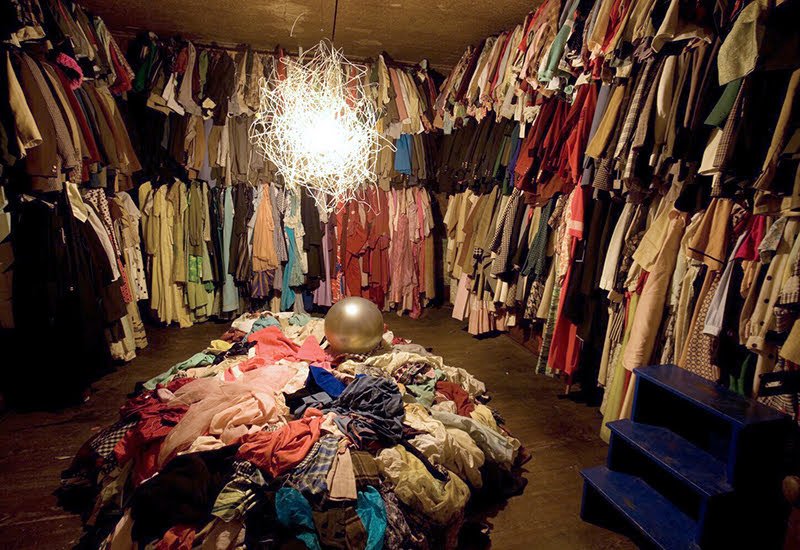
Elsewhere’s closet holds a multi-layered deep room full of clothing, hats, accessories that Elsewherians can wear during their stay, and that visiting creators can use for costumes, photo shoots. Sylvia notoriously cut buttons off of dresses and coats, so don’t be surprised if you discover items without fastenings. The collection spans mostly from the 50s and afterwards.
3rd Floor

This room houses the collection of papers, largely from the days of Joe Gray and the Army Surplus and Catalog Sales company. The historical archives have preserved pamphlets of papers, letters, photographs, and other detritus found throughout Elsewhere.
Interested in helping Elsewhere with archiving initiatives? Contact museum@goelsewhere.org.

A massive collection of World War II and Korean War Army Surplus is amassed—mess kits, tents…


Were they storage closets? Servants quarters? These four subsequent rooms have been interpreted countless times by artists over the years. As discreet, enclosed installation spaces they inspire and delight.
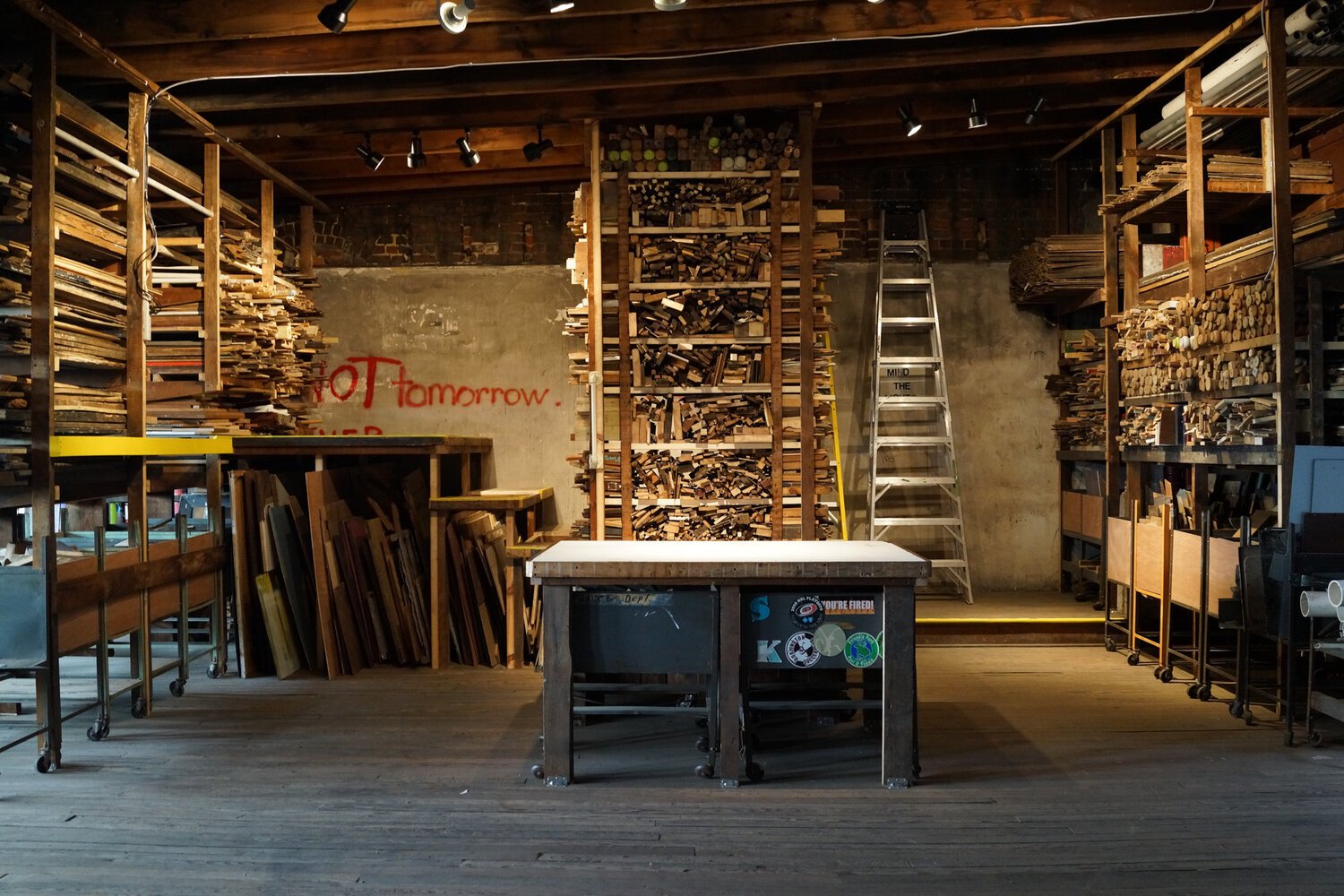
A giant room on the third floor includes multiple archives—unfinished furniture, a wood library, bolts of fabric, as well as workshop and a small stage. Eight windows stretch across the back of the building.
Above
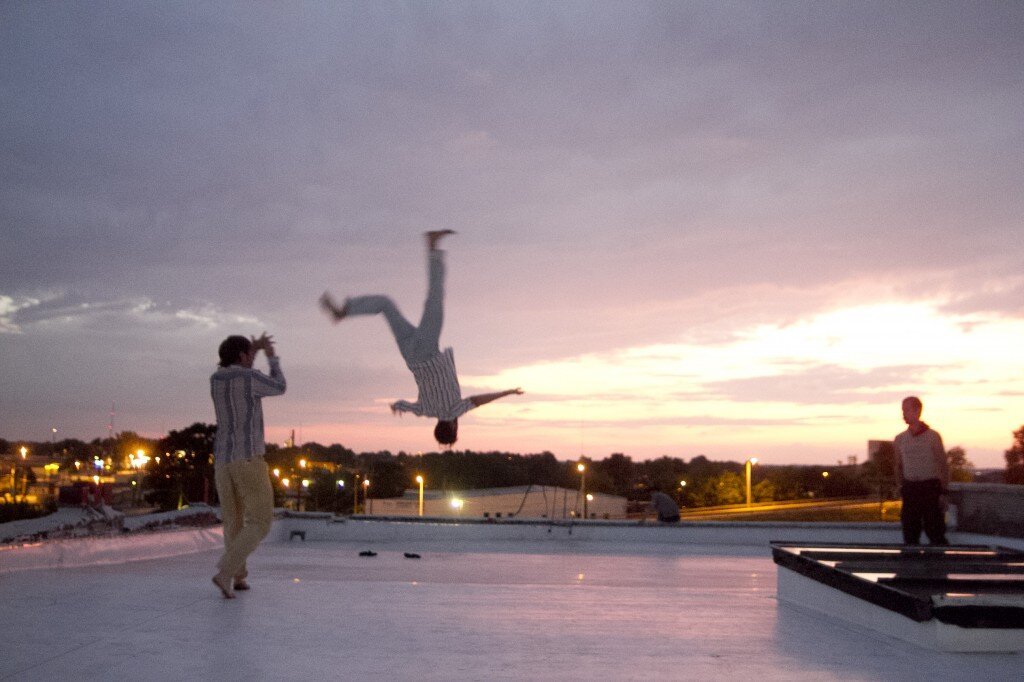

The attic transformed into aviary by Justin Rabideau (2017) becomes a beacon and a source of deliverance for those seeking to send messages to those far away. The installation, constructed of various standard and sculptural birdhouses made from the Elsewhere Wood Library gives home to blown glass objects containing love letters sourced from Rabideau, fellow artists, interns, and staff of Elsewhere. Remembering Justin Rabideau article on Burnaway.
What is collection and what is not? Is dryer lint from washing clothes from The Wardrobe collection? What about sawdust from cutting collection wood? What about objects found on the sidewalk on our block? What about Sylvia’s son’s business records for a business that was run outside of the building? What about the shark in formaldehyde? We love asking these questions!